Just weeks after its Netflix premiere, the series María la Caprichosa (Defying Destiny, in English)—inspired by the life of Afro-Colombian domestic worker leader Pérxides María Roa Borja—has climbed to the top of the streaming service’s global most-watched list. What makes this series stand out beyond an engaging storyline, strong performances, and high production values? Its political dimension and social commitment go beyond fiction: starting from one woman’s lived experience, it builds a collective story shared by millions of women worldwide, advances a new narrative around domestic work, and dares to challenge the status quo. A phenomenon that looks set to keep crossing borders.
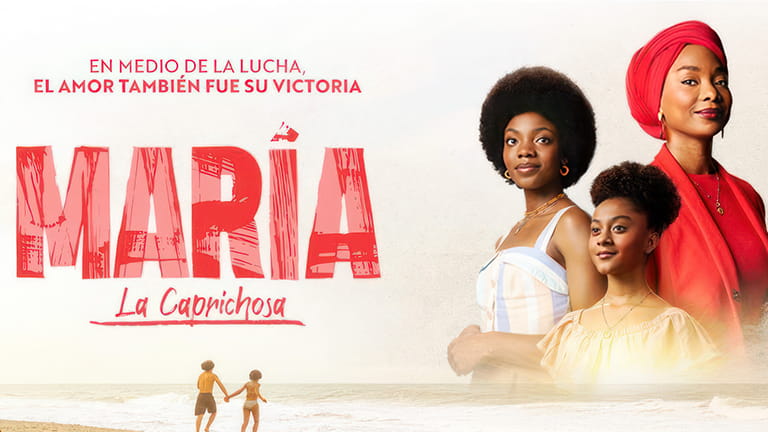
Produced by Colombia’s Caracol Televisión, María la Caprichosa (released internationally as Defying Destiny) landed on Netflix on January 5, 2026, and quickly captivated audiences around the world—an unusual feat for a Latin American production. And its reach goes far beyond classic drama: its greatest achievement is turning a personal experience into a resonant, ensemble narrative—one that lays bare the inequality, discrimination, racism, and structural classism that persist in Colombia, while honoring the long struggle of the women who hold society up from the shadows of invisibility and systematic abuse. That unjust reality—and that sustained fight for dignity—is shared by domestic workers across all regions, throughout history, in every context.
Defying Destiny is timeless, universal, and multi-layered—just like the life of Pérxides María Roa Borja herself (María Roa, to her comrades in struggle): cofounder of the Unión de Trabajadoras Afrocolombianas del Servicio Doméstico – UTASD (Union of Afro-Colombian Domestic Service Workers) and its current General Secretary; a leader of the domestic workers movement; a symbol of resistance for Black and oppressed women; and the newly appointed national lead for household inspections at Colombia’s Ministry of Labor. She is the one who put politicians on the defensive, confronted the elites, and exposed the contradictions of a small-minded society. She is the woman who cornered politicians, confronted the elites, and exposed the contradictions of a mean-spirited society. She is the one who made the invisible visible, laying bare the day-to-day reality of hundreds of thousands of women who, for decades, have cared for other people’s homes and families—often at the expense of their own—without labor rights, for poverty wages, in conditions of exploitation and abuse that society had come to treat as normal. She is, quite simply, María la “caprichosa” (the tenacious one).
“There are thousands of domestic workers around the world who have felt touched by my life story—who call me and tell me, ‘Your story is mine, and it gave me my humanity back; it woke me up, because I’ve lived through the very same things.’ To them I say: face life with ‘capricho’ (tenacity). Put every negative thing you’ve lived through into an imaginary little box, add ‘capricho’, and turn it into strength—into love, resilience, and determination so you can reach your goals. We are brave women who build power and drive change. Put plenty of ‘capricho’ into everything you do, and you’ll see that together we’re going to make it.”
María Roa
From “capricho” to the global stage
It all began when writer and activist Paula Moreno—former Minister of Culture of Colombia, and the first Afro-Colombian woman to hold a ministerial post in the country—met María Roa while serving on the jury for SEMANA magazine’s leadership awards. It was “love at first sight.” María’s charisma, her life story, and her groundbreaking achievements as a domestic worker leader moved Paula deeply—and inspired her to write a book that would not only portray a poor Black woman’s ability to drive change from the grassroots and make the impossible possible, but also challenge a society that has historically undervalued the work of those who sustain the care infrastructure.
“María fascinated me because she wasn’t just an eloquent woman giving speeches—she was a woman who had passed laws in Congress. From her perspective as a domestic worker, she had the vision to transform an entire system,” Paula Moreno said in an interview with EFEminista (the gender-equality portal of Agencia EFE). After years of conversations, heart-to-heart confessions, and shared work between María and the author—many of them online during the pandemic—Soñar lo imposible: Desafiando las miradas desiguales (Dreaming the Impossible: Challenging Unequal Perceptions) was published in 2022 by Penguin Random House.
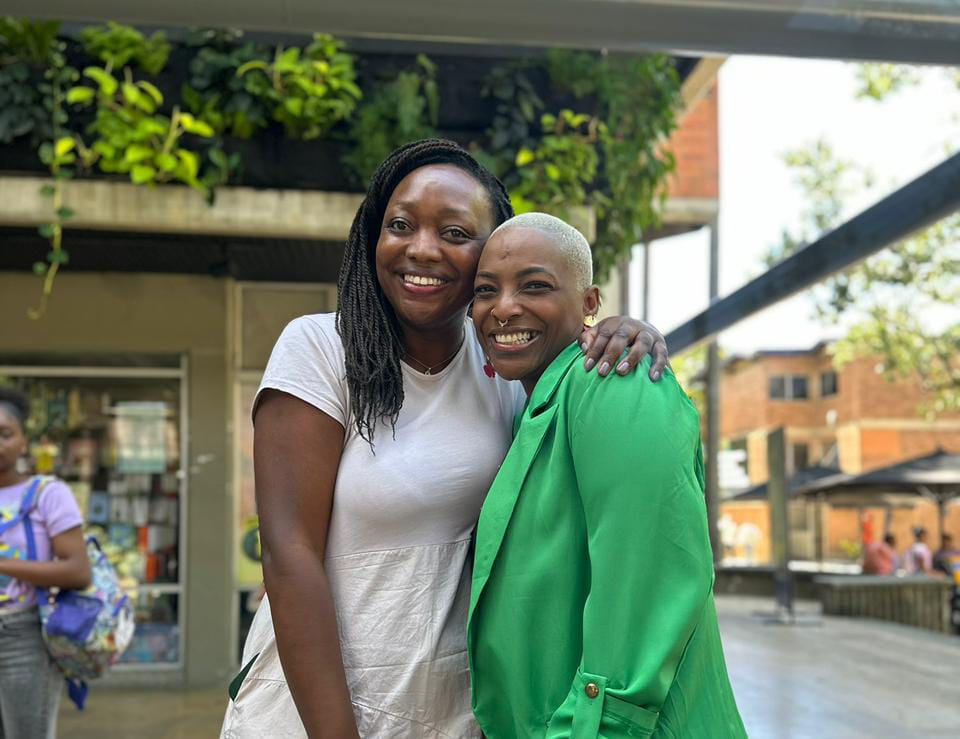
Then came Caracol Televisión’s proposal to produce a series based on the book—and Netflix’s decision to include it in its international catalogue. Across 64 episodes, the fiction traces María’s life from childhood to the present. With an authentic narrative voice and a visual style that fits the story, Defying Destiny follows María’s transformation—from her most painful vulnerability to her rise as a symbol of resistance, collective power, and hope—and shows how she played a pivotal role in gaining recognition for domestic work in Colombia.
Still, María says that personal transformation hasn’t changed who she is at her core: “I’m aware of what it means to be the central figure in a story that’s gone global, but I’m still the same Pérxides María Roa Borja—tenacious María. What has changed is the recognition I’ve received from people, and how many see themselves in my life story. That brings me so much joy, and it pushes me to fight even harder for the change I want.”
What’s most compelling—and “revolutionary”—about Defying Destiny is that it doesn’t present María Roa’s brutal story as an isolated incident or an exception to the rule. Instead, it frames it as a reality that has shaped Colombian domestic workers for generations. Nor does it aim to highlight an individual overcoming story. Rather, it offers a full—and complex—portrait in which the true main characters are domestic workers: their harsh daily reality and their organized struggle for decent work and social justice in a deeply hostile environment.
María played a central role in the making of the series, helping shape the characters and the plot. She even took part in choosing the title: her father used to call her “caprichosa” (tenacious) because of the tenacity with which she chased her goals, and he would urge her to bring “capricho” (tenacity) to everything she did in order to get ahead—advice María followed to the letter. “When I saw the final result, I got emotional and felt proud—not only because it reflected my life faithfully, but because Caracol proved we could break through that wall that kept the enormous talent of Black actors and actresses in Colombia from being given space. I’m grateful to Caracol for taking a chance on my story. Because the stories of Black women and domestic workers have to be told so the world can see them. Those stories are never told. And when they are shown, they’re framed within another culture and pushed into a secondary place,” María says.
The Defying Destiny phenomenon is here to stay. According to María Roa, a second season is being considered, along with a podcast meant to inspire domestic workers around the world. “I want us, together, to build ‘capricho’, to move forward, and to achieve the goals we have—both in our working and union lives and in our personal lives. Yes to ‘capricho’!” María proclaims.
A story that was begging to be told
Pérxides María Roa Borja was born in 1978 in Apartadó, in Antioquia’s Urabá region—an area shaped by armed conflict and poverty. Raised in a working-class Afro-descendant family, María learned what discrimination meant from a very young age, as opportunities were denied and doors were shut in her face. After her sister was murdered amid the violence that gripped the region—and after she got pregnant at just fourteen—María had to abandon her dream of studying to become a teacher. She moved to Medellín to support herself and her son.
That is how María began working as a live-in domestic worker, far from her loved ones, driven by urgent economic need that forced her to endure all kinds of abuse—from labor exploitation to discrimination, harassment, and gender-based violence. Still, she looks back on those hard years without bitterness. Today, she speaks to the girl she once was with gratitude and optimism: “To the girl society denied everything because she was Black, I would tell her there’s nothing to change about her life—or her destiny. I’d tell her to keep bringing ‘capricho’ to life, to keep dreaming and building, to keep focusing on the good things that come her way. Today I thank God, the Universe, and my parents for everything beautiful that’s happened to me.”
Over time, and as she connected with other domestic workers, María realized her experience wasn’t an isolated one—it was shared by poor Afro-descendant women across domestic work. At the time, domestic work in Colombia had no legal protections, and the women who did it were dehumanized by white employers who kept the legacy of a colonial, slaveholding past alive. That realization changed María profoundly: she stopped seeing herself as a victim and began to see herself as an agent of change, capable of leading a collective organizing process for decent wages, recognition, and basic rights. “The devaluation I experienced pushed me to stand my ground and move forward. I realized I could speak with absolute certainty about rights—from a place only those of us who have lived discrimination in our own skin can truly know,” she says.
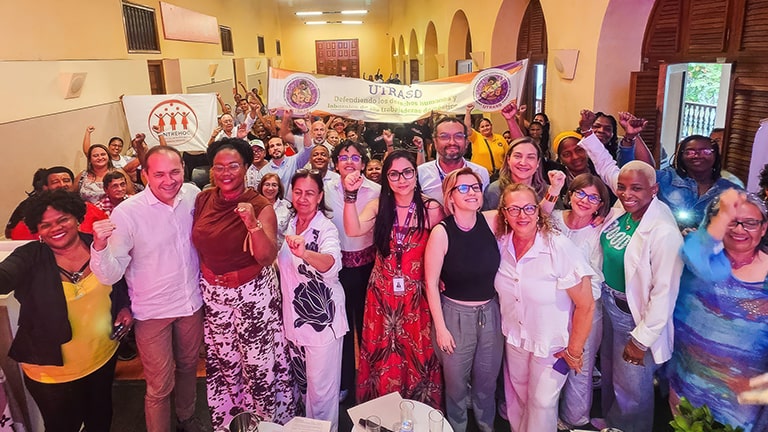
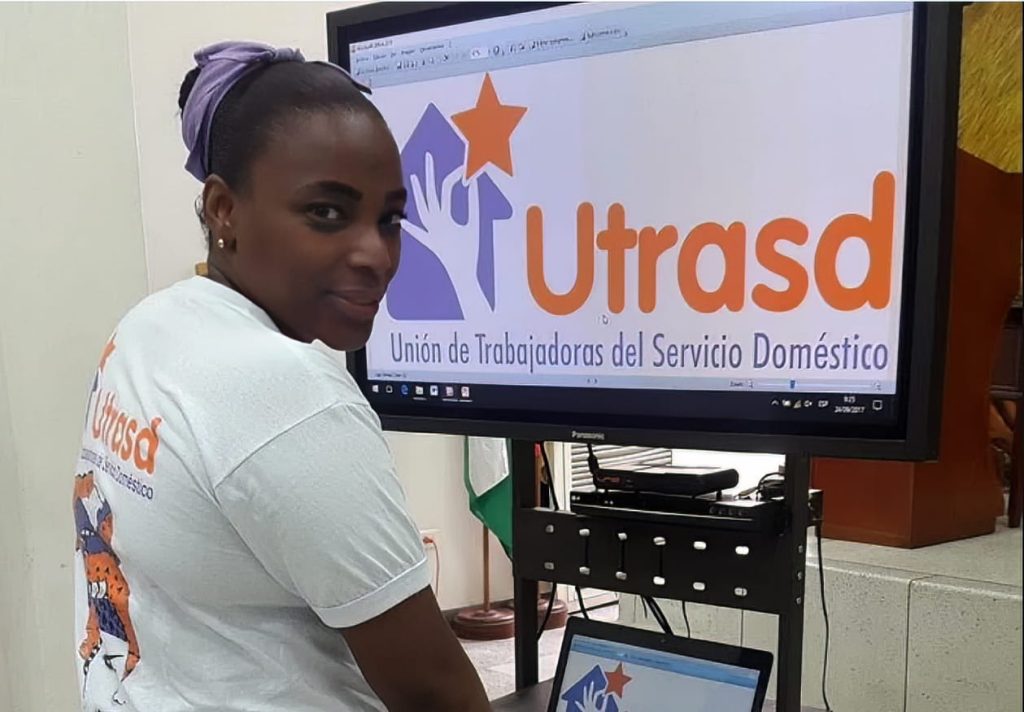
In Medellín, an empowered movement was born—bold, questioning, and determined to dismantle the established order. In 2013, alongside 28 other Black women, María co-founded the Unión de Trabajadoras Afrocolombianas del Servicio Doméstico – UTRASD (Union of Afro-Colombian Domestic Service Workers), an organization that places its members’ intersectional identity at the core of its strategy to challenge the system. Today, UTRASD also has a presence in Bogotá, Bolívar, Urabá, and Huila.
The movement’s first collective victory came in 2014, when Colombia ratified ILO Convention 189 (on decent work for domestic workers). By then, María Roa’s name already carried weight in Colombia and beyond. In 2015, she was invited to Harvard University to speak at the “Women and Work for Peace Building” conference, where she received a standing ovation. That same year, SEMANA magazine named her one of the country’s Ten Best Leaders, and El Espectador recognized her as Person of the Year. The New York Times also published a feature about her work titled “A Maid’s Peaceful Rebellion in Colombia.”
In 2016, after years of mobilization and political advocacy, the movement secured the passage of Law 1788, which entitled domestic workers to the statutory service bonus—a benefit that had long been denied to them. But the fight was far from over. It continued all the way to 2025, the landmark year when the Domestic Work Labor Reform was passed, aligning national law with ILO Convention 189 and equalizing domestic workers’ rights with those of the rest of the workforce. One month later, another historic milestone followed: Colombia’s Ministry of Labor established mandatory collective bargaining in domestic work.
In Colombia, there are nearly 750,000 domestic workers. Ninety-five percent are women, most of them racialized and from vulnerable communities. Sixty percent earn the minimum wage or less; only 17% have social protection coverage; and 79% are in informal employment. But today, thanks to the hard-won victories led by María and her “caprichosas”, these women can finally begin to imagine a different future—for themselves and for the generations of domestic workers who will come after them. In her new role leading household inspections nationwide, María vows: “I won’t stop until employers sit down at the table with domestic workers and collective bargaining becomes real in practice. And I will knock on every door until my comrades are formalized—with written contracts and labor rights.”
María didn’t just help secure the recognition and legal protections Colombian domestic workers deserve; she also reclaimed a dream she had postponed for years: going back to school and earning a degree. In 2024, she graduated in Social Work from Corporación Universitaria Minuto de Dios. María Roa is living proof that the biggest changes begin when we dare to dream the impossible—and bring “capricho” to life in pursuit of those dreams.
“I’ve turned every pain into strength, courage, love, pride, perseverance, resilience, sisterhood, humanity, values—and the fight to claim the labor and human rights of domestic workers, and of all women.”
María Roa
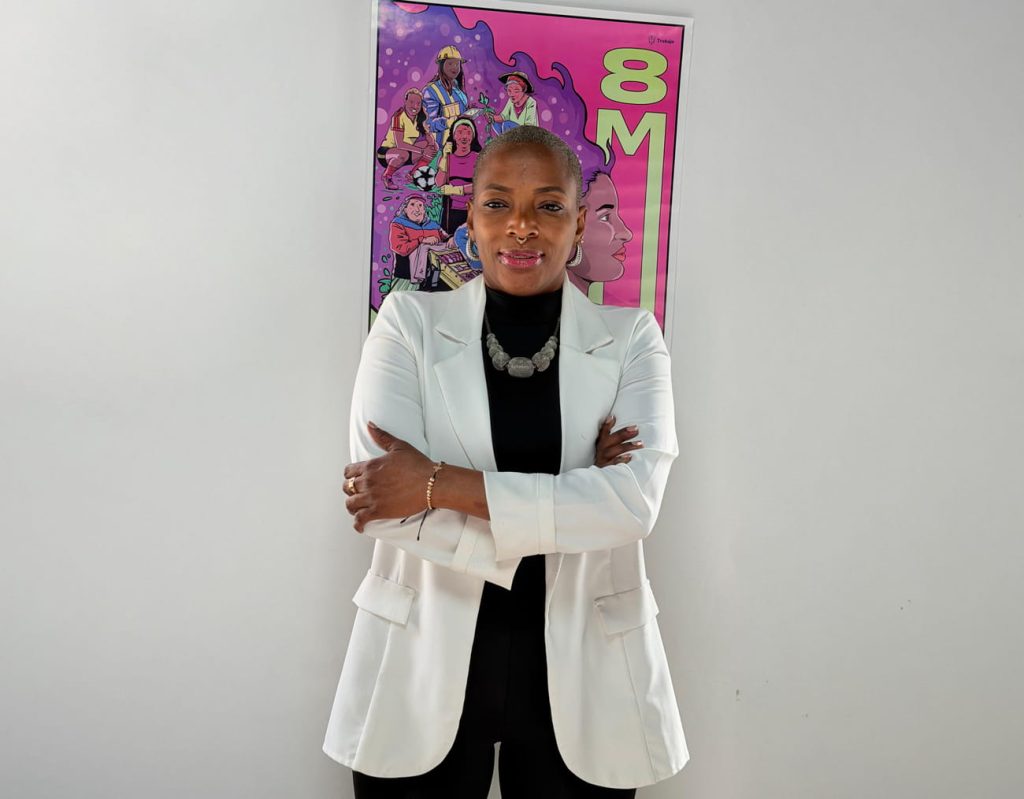
The personal is political—always, and everywhere
Defying Destiny could not better capture the DNA of the domestic workers global movement and the premise that guides it: the personal is political. One woman’s fight is every woman’s fight. That is the engine of collective action—the force that makes real, lasting change possible.
The power of a leader like María Roa expands into the movement as a whole and becomes collective power—opening doors to the spaces where institutional power is forged, where legal, narrative, and cultural shifts can be pushed forward. And as the movement grows stronger, new leaders rise—making it stronger still. A virtuous circle that moves mountains.
Why does this series mark a turning point in popular storytelling about domestic work? Because it dares to say—and to make visible—what societies keep quiet and push out of sight. Because it challenges, unsettles, and demands reflection. And it doesn’t resort to melodrama or cheap shots: it presents reality in its purest form, without sugarcoating.
Domestic workers are not victims or stereotyped side characters: they are empowered main characters. And politics doesn’t happen only under grand domes or in the hands of elites: it is shaped in homes, every day—between brooms and cooking pots, between employers and domestic workers. Transformation almost never arrives from the top down, and it doesn’t come by magic, like in Cinderella: it is built from the grassroots—with hard work and sacrifice, with determination and resilience, with many hands and a single voice.
“The IDWF plays a central role in my life, because it has backed my leadership and helped me get to where I am today. Everything I’ve lived through has strengthened me and allowed me to share my experiences with other women who have gone through—or are going through—what I went through. Today I do much more than talk to domestic workers about rights: I talk to them about the ‘capricho’ I’ve brought to life to keep moving forward.”
María Roa