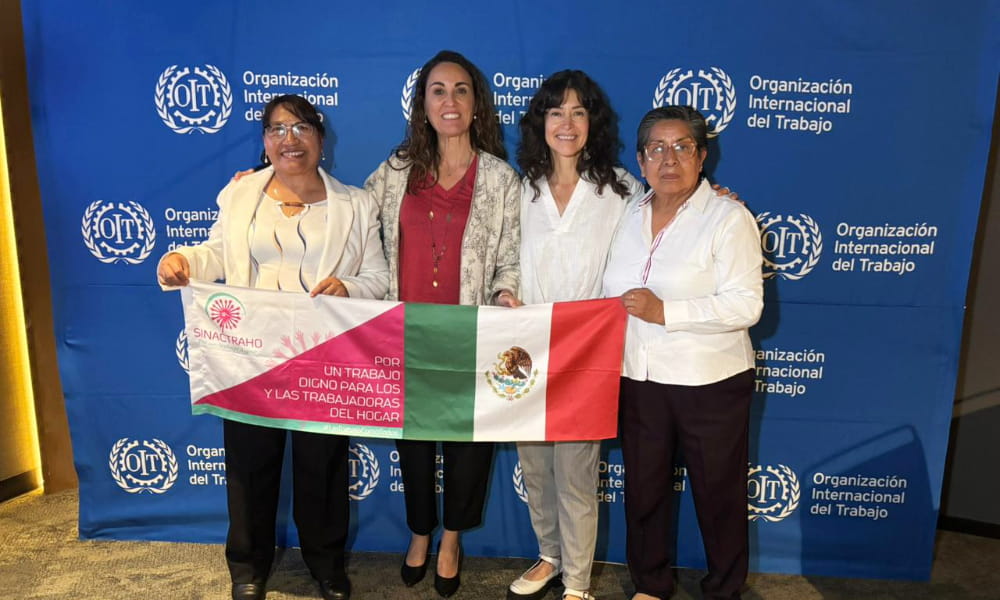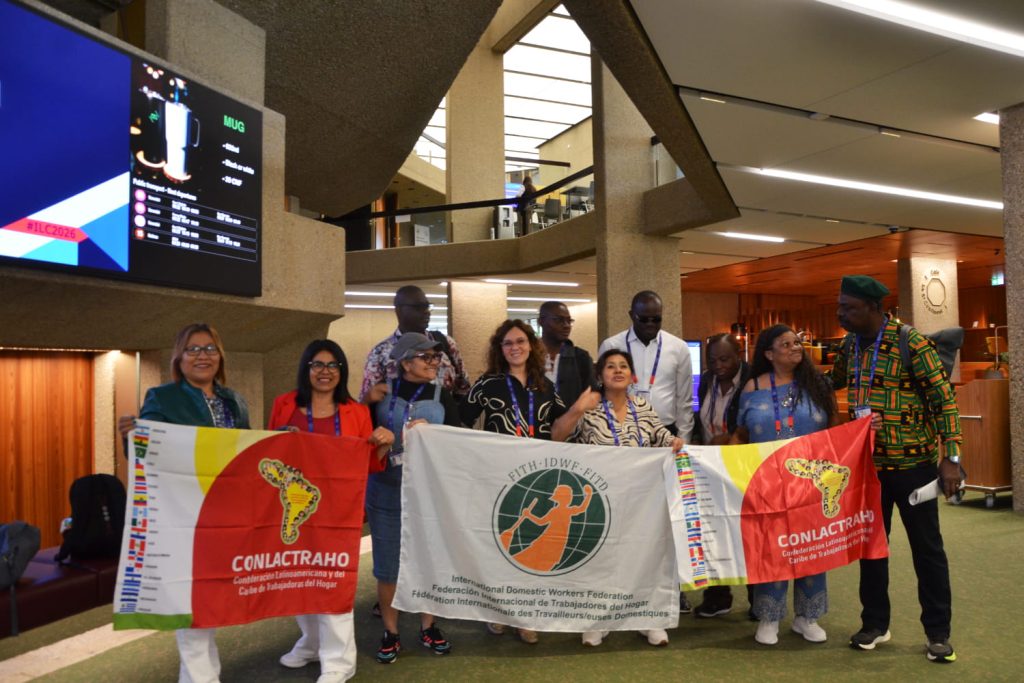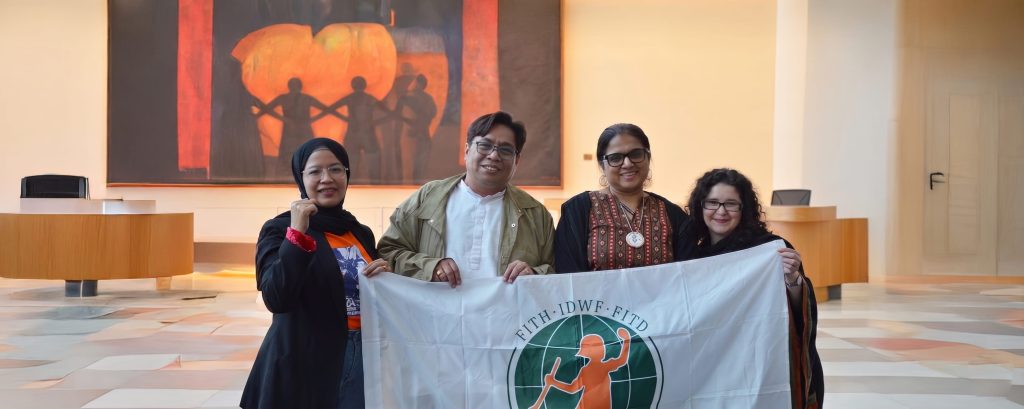
The 70th session of the Commission on the Status of Women (CSW70), which focused on women’s and girls’ access to justice, took place in a complex and deeply contested global context, marked by rising authoritarianism and coordinated efforts to roll back commitments to gender equality. In this hostile environment, the IDWF’s coordinated and strategic efforts, together with the Global Union Federations (GUFs), to secure the inclusion of the Decent Work Agenda in the Agreed Conclusions were especially significant. Our participation went far beyond visibility: we helped shape narratives, strengthen alliances, and advance concrete policy gains. Once again, we made it happen!
Tangible Gains in an Adverse Context
The 70th session of the Commission on the Status of Women (CSW70) took place at United Nations Headquarters in New York from March 9 to 19, 2026, in a global context dominated by authoritarian and anti-feminist trends. This year, negotiations began even before CSW officially opened, and there was no mention of the world of work — a very discouraging starting point. Yet, the IDWF, the global trade union movement, women’s organizations, and civil society managed to fight back and secure concrete gains. Our role evolved from individual advocacy to proactive agenda-setting and movement-building. As space narrowed inside the negotiating rooms, we expanded our alliances, sharpened our strategies, and strengthened our collective action. And it worked.
Through coordinated participation in high-level events and in the drafting committees responsible for revising the Zero Draft, we helped ensure that domestic workers and informal workers were placed at the center of global debates on care, labor rights, and justice. This was reflected in the Agreed Conclusions adopted by Member States, which recognize labor standards and include several commitments in line with trade union demands and IDWF priorities:
- Right to work and rights at work: The text recommends fulfilling obligations arising from relevant International Labour Organization (ILO) conventions, addressing violence and harassment in the workplace, and tackling the gender pay gap. It also includes enforcement of labor rights, including the right to organize and bargain collectively, the transition from informal to formal employment, decent work, and the right to redress and justice for victims of labor rights violations.
- Care economy: UN Member States commit to investing in the care economy and strengthening care and support systems by recognizing, reducing, and redistributing women’s disproportionate share of unpaid care work. However, the text makes no mention of two of the Rs that make up the 5R Framework for Decent Care Work — represent and reward — both of which are critically important for the domestic work sector. This marks a step backward compared with the CSW69 Political Declaration, which explicitly referred to all 5Rs.
- The role of trade unions: Trade unions are recognized as key actors in promoting women’s access to justice.
- Gender-responsive justice systems: The text calls for adequate financing of access-to-justice policies, gender balance at all levels of public governance and justice systems, capacity building for all justice system professionals, and stronger institutional capacity to mainstream a gender perspective in laws and policies, including labor inspection.
- Capacity building: Commitments were made around legal literacy for women, free legal aid, and investment in education, lifelong learning, and vocational training for women and girls.
- Call for systemic change: The text recognizes multiple and intersecting forms of discrimination, as well as structural and systemic barriers, as major obstacles to gender equality.
As the Global Unions statement on the CSW70 Agreed Conclusions points out, despite attempts led by the United States to revisit language already used in previous documents and redefine gender in narrower terms as “male” and “female,” the original, more inclusive language was ultimately retained. At the same time, several paragraphs of the Conclusions were weakened through references to implementation being “subject to national law,” especially in relation to girls’ rights. Access to justice in relation to sexual and reproductive health and rights also remained highly contentious.
For the first time at CSW, the Agreed Conclusions were put to a vote and adopted with only one vote against — the United States, which also tabled a separate resolution that was not adopted. Still, we have to remain more vigilant than ever at a time when workers’ rights, social justice, inclusion, and equality are under attack. The IDWF and the GUFs will continue promoting standards that protect everyone and demanding accountability from governments to ensure that the commitments made during CSW70 are implemented in practice and lead to tangible improvements in women’s access to justice in the world of work.
IDWF Strategic Engagement at CSW70
The IDWF delegation to CSW70 was composed of June Barrett, IDWF Vice President; Doug Moore, North America Executive Committee Member; Adriana Paz, General Secretary; and Sofía Treviño, Strategy and Impact Coordinator.
The IDWF co-hosted three cross-movement events with partners from the labor, feminist, and development fields to bring care, labor rights, and access to justice into shared agendas and discussions. We also participated in eight dialogues that helped advance discussion on issues that are central to the domestic workers movement with a range of audiences, including partners, media, philanthropy, governments, and other key stakeholders.
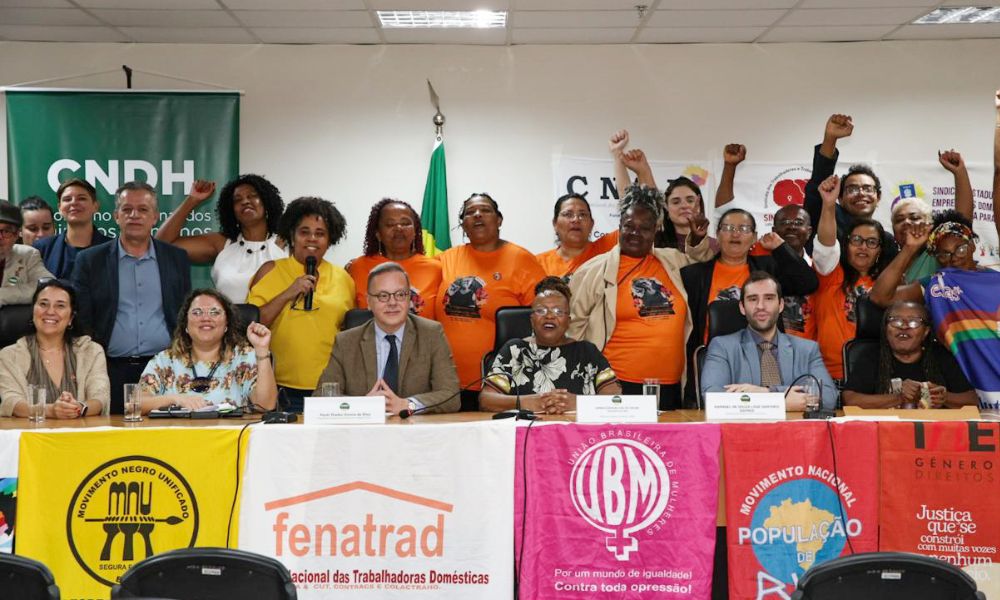
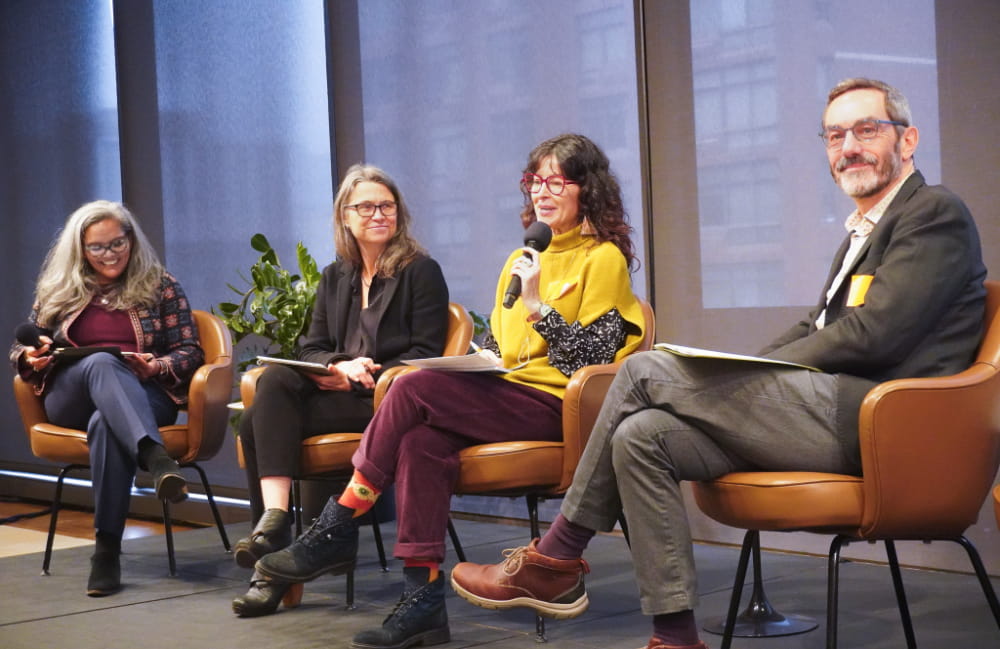
The parallel event held on March 16 deserves special mention. Access to Justice in Times of Rising Authoritarianism: A Labor Feminist Agenda, co-hosted by the Ford Foundation, the IDWF, the Solidarity Center, WIEGO, Working Horizons, the Global Alliance for Care, Global Labor Justice, and UNI Global, among others, brought together trade unions, informal worker organizations, feminist actors, and philanthropy to collectively redefine access to justice through a labor feminist lens. The event became a high-level space for alignment and agenda-setting, where shared priorities and strategic directions were defined to confront corporate power and democratic erosion as central challenges in the fight for justice.
CSW70 involved intense days of hard work, but it was also highly productive. Throughout the session, the IDWF strengthened its role as a key bridge between labor and feminist movements, while helping secure tangible policy gains and stronger political positioning. We saw concrete results in the effort to shape policy discourse and global narratives around decent work and around domestic workers as central actors in the care economy. At the same time, cross-movement collaboration and strategic alignment helped strengthen our influence on the CSW70 Agreed Conclusions, expand the space for IDWF visibility and action, and pave the way for broader coalitions and future collaboration with greater political leverage, particularly in advancing care policies at both the global and national levels.
Moving Forward Through Collective Action
There are at least 75.6 million domestic workers worldwide, more than 85% of whom are women. Many are migrants, racialized, or working under precarious conditions. For millions of them, justice remains out of reach. There can be no access to justice without labor rights, and there can be no gender, racial, economic, or migrant justice without decent work.
Throughout CSW70, the IDWF and our allies created spaces that brought together feminist, labor, climate, migrant, and democracy movements. Access to justice — like every other major goal — cannot be achieved in isolation. There is real power in coming together with women from around the world, across sectors and with diverse backgrounds, experiences, and personal histories, yet with shared challenges, struggles, and priorities. This year, more than ever, our participation in CSW reaffirmed two fundamental truths: that we are not alone, and that the only way forward in a time when democracy is under threat is through collective action.
Looking ahead to CSW72 in 2028, when care systems will formally be on the agenda, we will continue building the power, alliances, and evidence needed to ensure that care justice is not co-opted, but anchored in decent work, human rights, public financing, and democratic participation. Access to justice must move from paper to practice, from promises to protection, from recognition to redistribution. It is not granted; it is organized and defended. That is why the IDWF remains unwavering in its commitment to defend it, no matter the cost, everywhere and every day. Because access to justice is not just something we talk about in the abstract: it is something domestic workers — and all women — deserve, and something that must be real in their everyday lives.
Both in the spaces where policy is shaped and on the ground, globally and locally, we are not asking to be included — we are shaping the agenda.
“The mother of all crises is the crisis of democracy. If we don’t reclaim democracy, we cannot solve the climate, economic, or gender crises — and worker-led organizations are key to taking it back.”
Adriana Paz, IDWF General Secretary