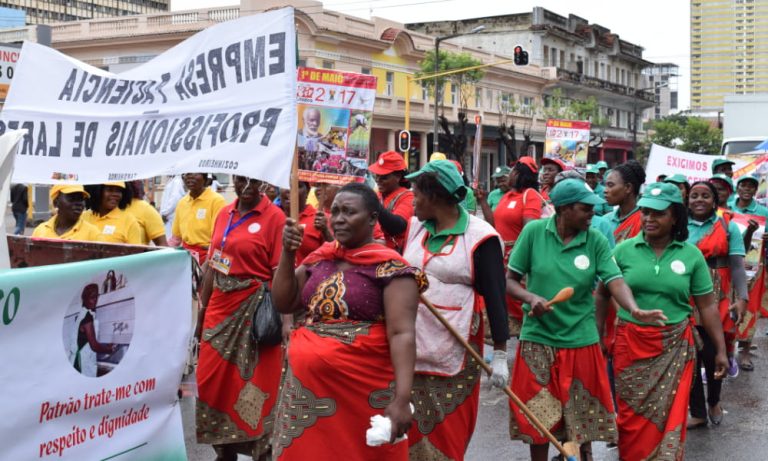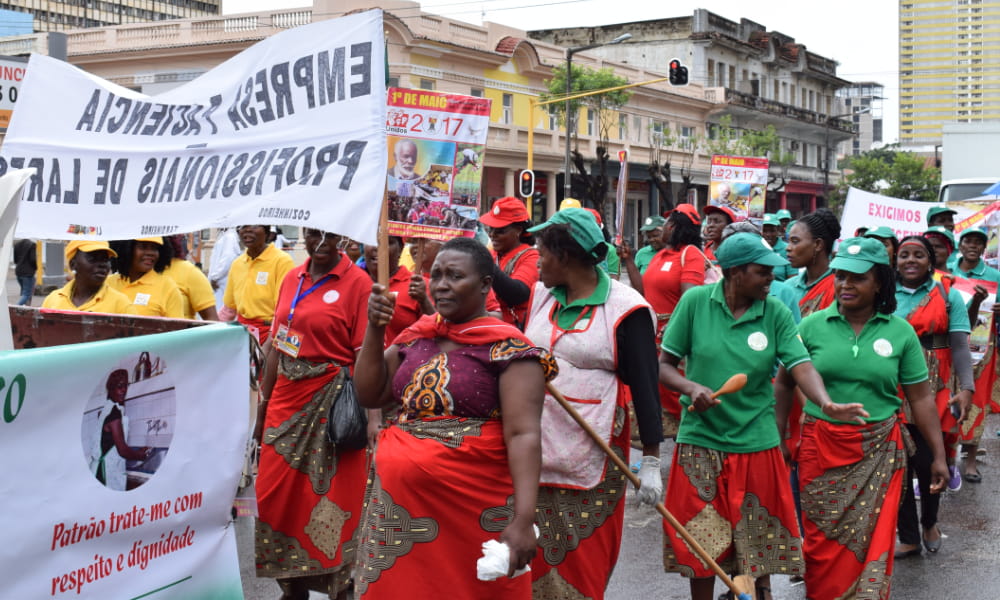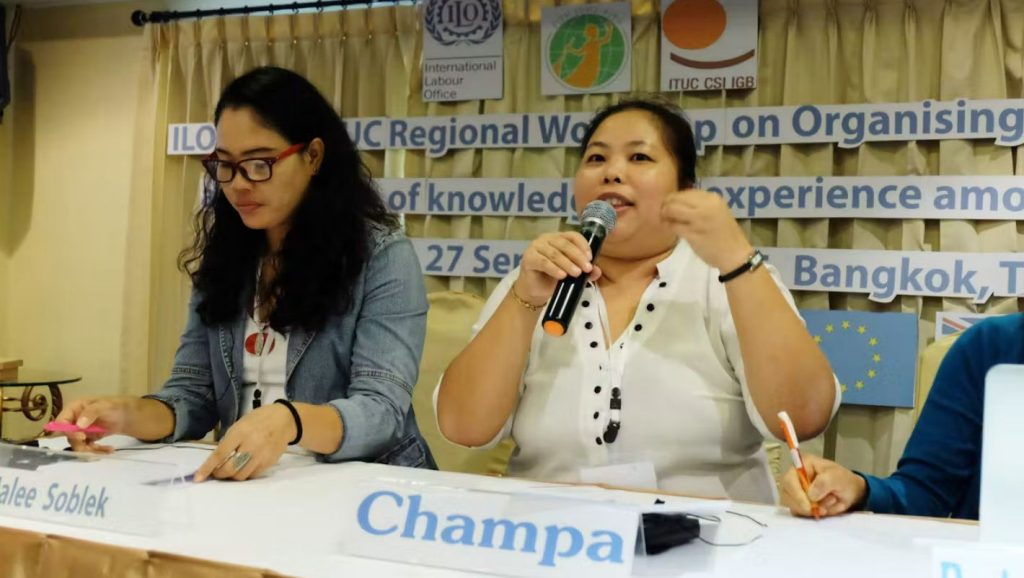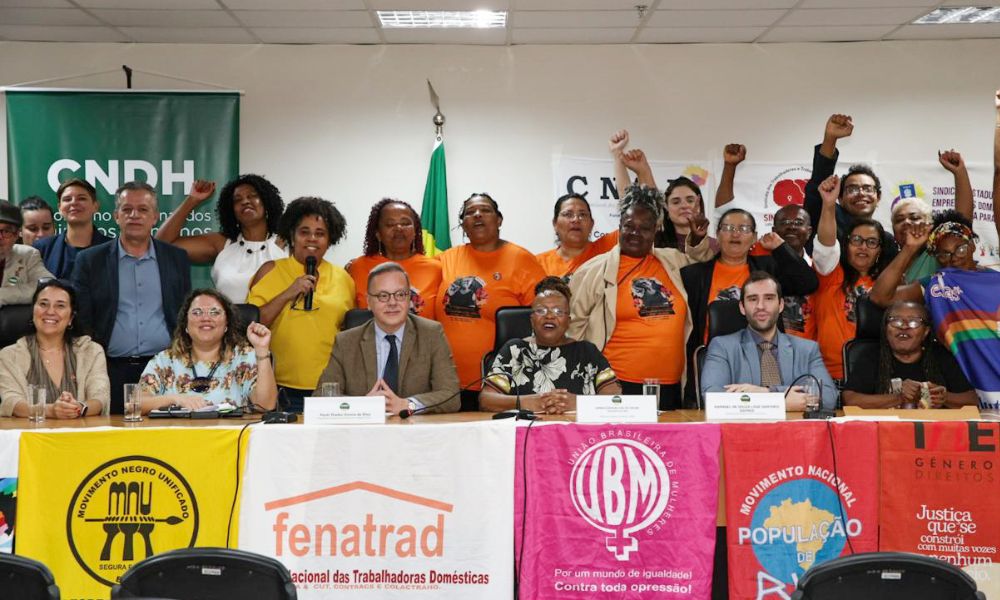
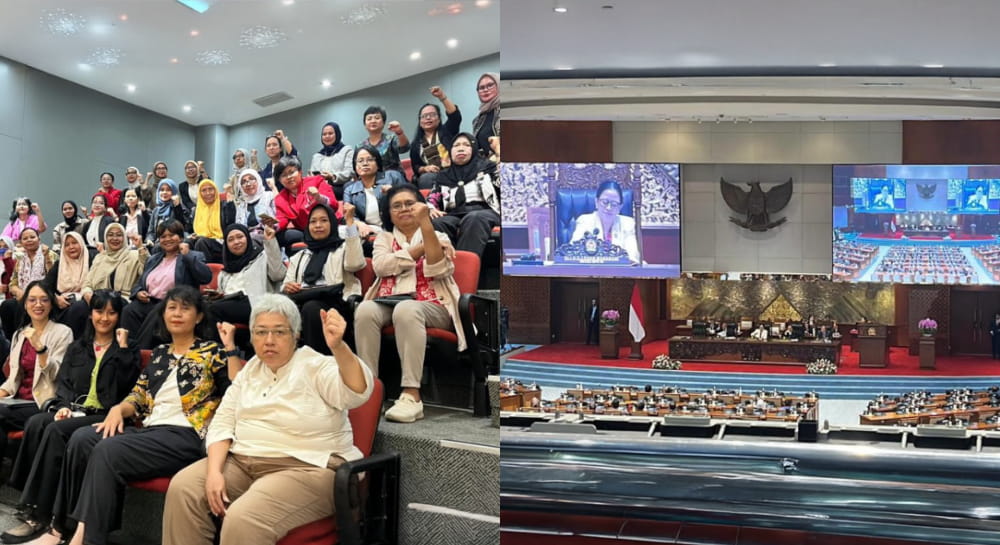
This April 21 will be a memorable day for domestic workers in Indonesia and for our movement around the world. Indonesia’s House of Representatives and the Government officially passed the Domestic Workers Bill (RUU PPRT), a major milestone in the recognition of domestic workers and their rights. It is the result of 22 years of tireless struggle, strategic campaigning, and collective action led by JALA PRT (National Advocacy Network for Domestic Workers’ Rights), with the support of the International Domestic Workers Federation (IDWF) and allied organizations. It took blood, sweat, and tears, but we made it happen, in the way only domestic workers can when they are determined to reach their goals. Now, the fight continues for the law’s effective enforcement and for further legal reforms that can bring real and lasting change to the 4 million domestic workers in Indonesia. Onward!
The International Domestic Workers Federation (IDWF) welcomes the long-awaited enactment of Indonesia’s Domestic Workers Bill, a historic milestone after 22 years of struggle by domestic workers in the country, led by our affiliate JALA PRT (National Advocacy Network for Domestic Workers’ Rights). The new law recognizes domestic workers as workers and establishes a legal framework for their protection, including employment relationships based on agreements or work contracts, access to health and employment-related social security, unemployment benefits, and access to education and vocational training. It also includes provisions aimed at preventing violence, abuse, and exploitation, and sets the minimum age of employment at 18. The law further regulates recruitment and placement mechanisms and prohibits wage deductions by recruitment agencies. It assigns oversight responsibilities to central and regional governments to support implementation and enforcement.
Historically, domestic workers in Indonesia have been excluded from labor law and fundamental labor protections, leaving more than 4 million domestic workers, most of them women, vulnerable to low pay, lack of social protection, excessive working hours, and physical and sexual abuse. This new law is a crucial step toward justice and recognition of domestic workers as workers with rights. That is why, on April 21, domestic workers broke down in tears in Parliament when the bill was passed, and celebrations spread across the country. For them, this law opens the door for society to recognize them as human beings with dignity, just like other workers.
“It feels like a dream. This is our 22-year struggle as marginalized women to gain protection,” said Ajeng Astuti, a domestic worker leader from the Sapulidi Domestic Workers Union in Jakarta. Jumiyem, chairperson of the Tunas Mulia Domestic Workers Union in Yogyakarta, added: “We have longed for this, and now we can finally feel it. Through heat and relentless rain, we kept standing together and fighting in front of the House of Representatives.”
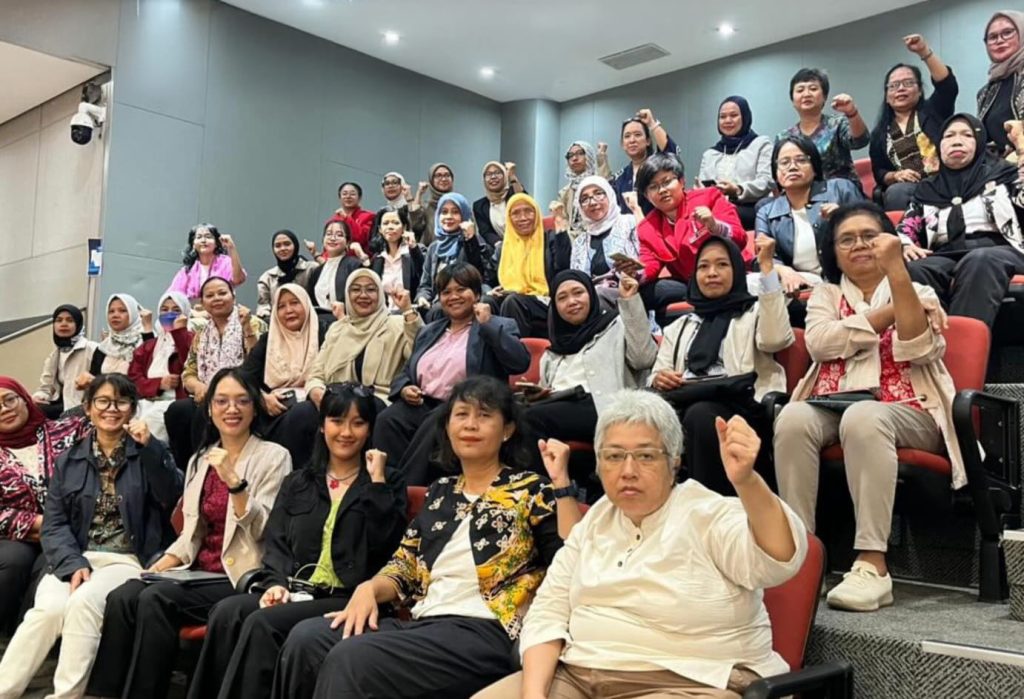
The push for legal recognition of domestic workers’ rights has been led for years by Jaringan Advokasi Nasional Pekerja Rumah Tangga (JALA PRT), together with eight domestic workers unions (SPRT – Serikat Pekerja Rumah Tangga) from Yogyakarta, Semarang, Tangerang, Jakarta, Makassar, and North Sumatra, as well as civil society organizations and trade unions. This coalition, created in 2004 to join forces and strongly advocate for the rights and welfare of domestic workers and to secure legal protection for them, submitted a draft bill that same year. However, for a range of reasons—and under the most absurd excuses—the bill remained stalled in Congress for more than two decades.
For 22 years, the coalition led by JALA PRT has organized hundreds of protests and mobilizations, social media campaigns, media engagement, lobbying before Congress, and social dialogue with government representatives, employers, unions, students, religious groups, women’s groups, and other key stakeholders. Their strategic advocacy, persistence, and leadership, both nationally and locally, have been instrumental in finally turning this law into a reality.
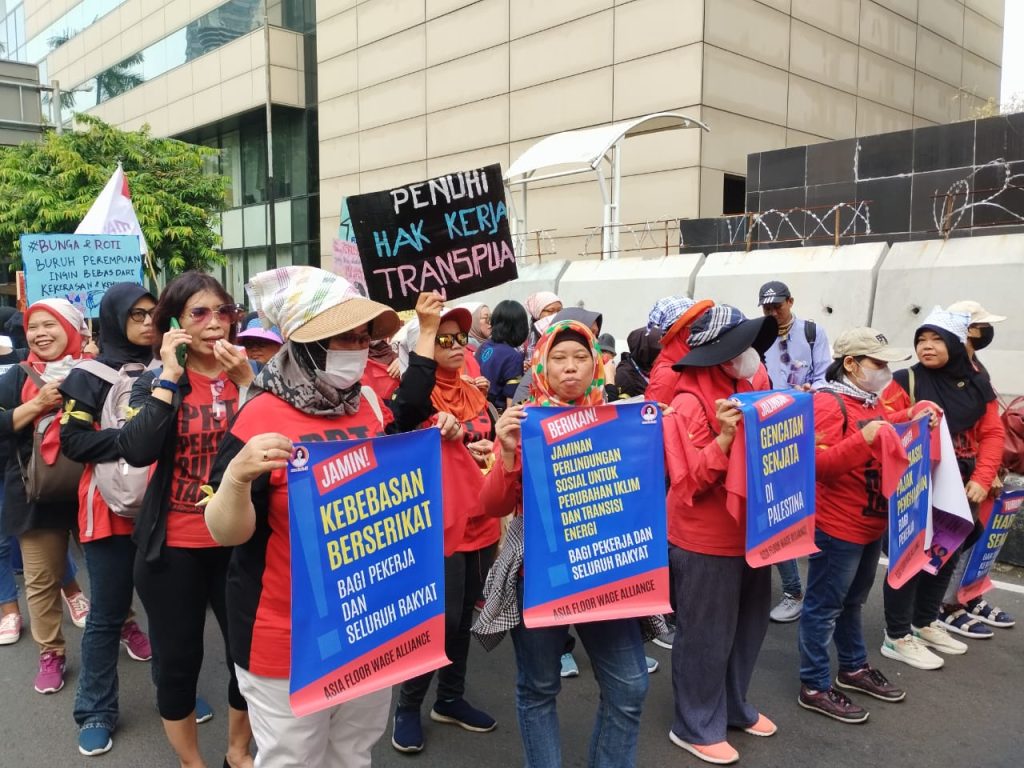
This new law is especially significant in a context where, in addition to lacking legal recognition and protection, domestic workers have traditionally been treated by employers and society as servants or maids (“Pembantu” and “Asisten Rumah Tangga” in Bahasa Indonesia), rather than as workers with rights, pushing many of them into situations of modern-day slavery. JALA PRT handled more than 3,000 cases of abuse against domestic workers between 2021 and 2024, including physical and psychological abuse, economic exploitation, and even human trafficking. One of the most widely reported cases was that of Siti Khotimah, a young domestic worker who was beaten, burned with cigarettes, forced to eat animal feces, and chained to a dog cage by her employers. In 2023, nine people in South Jakarta were sentenced to up to four years in prison for abusing and torturing her. Cases like this reveal the systemic discrimination domestic workers face and the deep undervaluation of domestic work in Indonesia.
“We are not allowed to sit in seats at our employers’ children’s schools. We are prohibited from using passenger elevators in residential buildings. We can only use freight elevators,” said Yuni Sri, a domestic worker from Jakarta. “We thank the organization for this shared struggle. Without the struggle and support of women’s and civil society organizations, this law would not exist,” she added.
“The legal recognition of protection for domestic workers is leading Indonesia toward a more civilized and humane society. We have always believed that this law would be enacted, despite the difficulties we have faced. But those difficulties are what kept us steadfast and always fighting for change, building a new framework to protect domestic workers, the majority of whom are women who have long supported the national economy but have faced discrimination and violence. We appreciate the leadership of the Legislation Body (Baleg), the leadership of the Working Committee (Panja), and the government for recognizing the struggle of domestic workers.”
Lita Anggraini, National Coordinator of JALA PRT
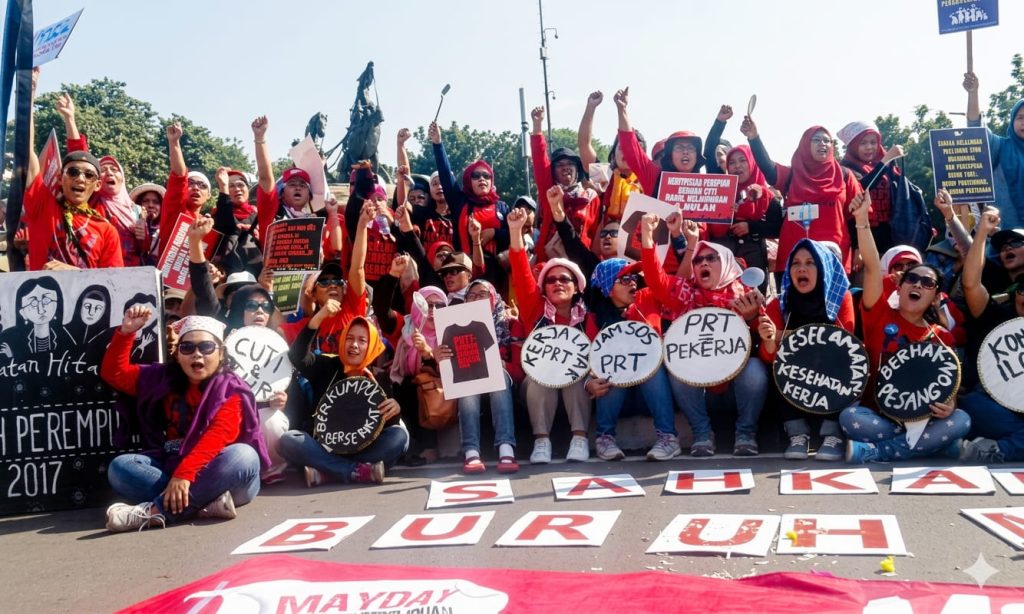
The passage of the Domestic Workers Bill is only the first step toward the full exercise of domestic workers’ rights in practice. Key protections still need to be defined through implementing regulations, which the government is expected to issue within 12 months. These should clarify crucial issues such as wage standards, working time, rest periods, paid leave, conditions for live-in workers, as well as enforcement mechanisms and penalties for non-compliance. “The most important thing now is recognition of working hours, religious holiday allowances, wages, days off, accommodation and food, as well as social security and social assistance, all of which have been missing and have kept domestic workers in poverty,” warned Lita Anggraini. Without strong regulations and effective implementation—in line with ILO Convention 189—the law may not fully translate into real protection, decent work, and dignity in domestic workers’ daily lives.
JALA PRT and the IDWF will continue leading the fight for the ratification of C189, further reform of the national legal framework, the full implementation and enforcement of legal protections, and the cultural and narrative changes needed to ensure recognition, respect, decent work, and a life of dignity for 4 million domestic workers in Indonesia, leaving no one behind.