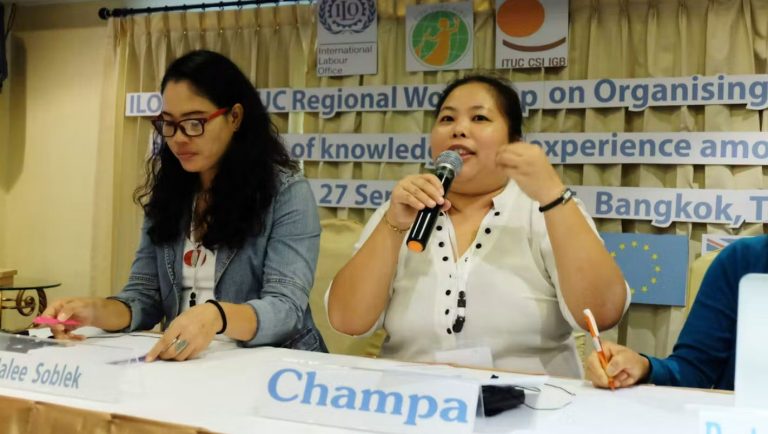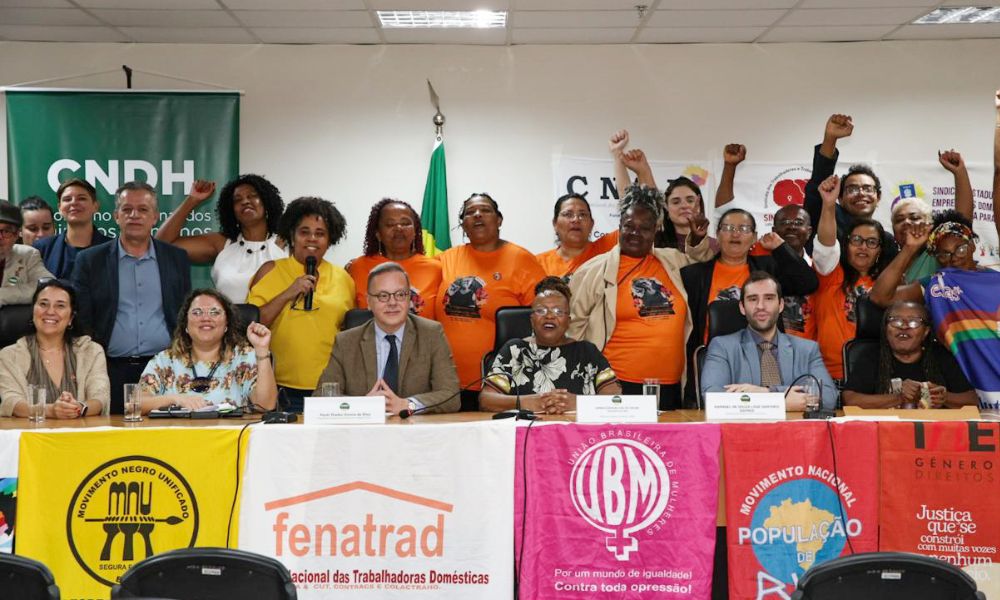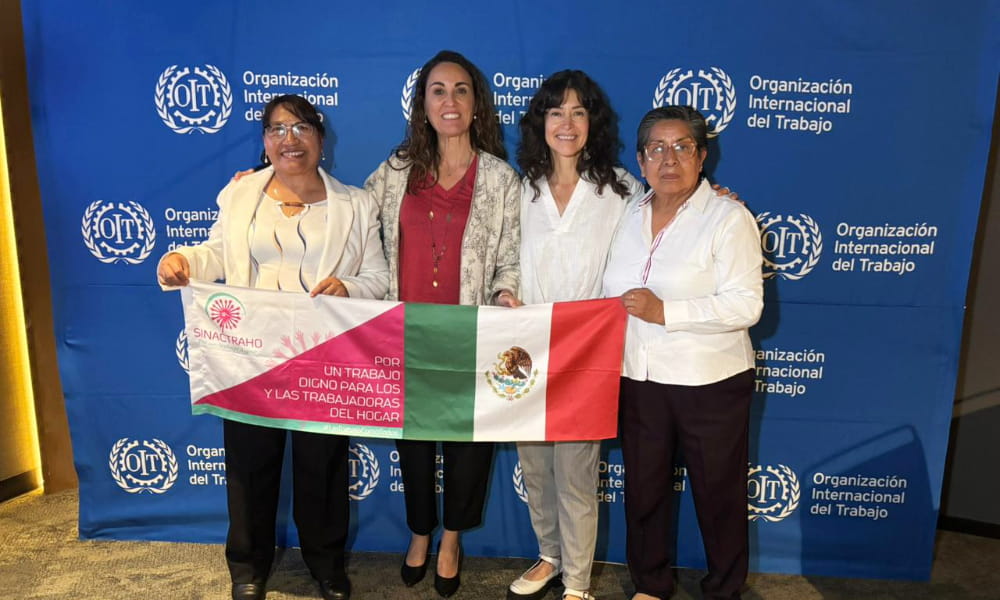
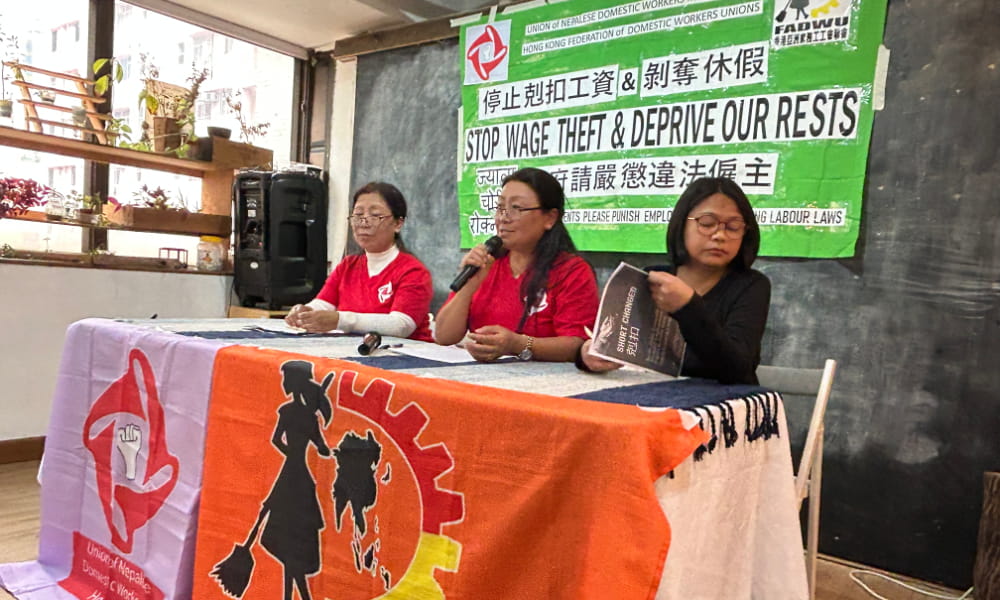
The Hong Kong Federation of Asian Domestic Workers Unions (FADWU) has secured two key commitments from the Labour Department aimed at improving migrant domestic workers’ working conditions. The department agreed with the consulates of Nepal and Bangladesh to launch the first-ever orientation program on labor rights for their nationals working as domestic workers in Hong Kong. It has also updated its handbooks on migrant domestic workers, stating that employers must provide “at least three suitable meals (breakfast, lunch and dinner) a day.” Although these guidelines are not legally binding, they clearly signal the government’s policy direction and can still be cited in court.
Over the past 16 years, FADWU has made steady progress in advancing migrant domestic workers’ rights. Through creative, strategic, and evidence-based advocacy, the union has won support from a wide range of stakeholders, gained greater visibility in the mainstream media, and pushed the government to take concrete action. In fact, the Labour Department’s latest steps came after the wide circulation of findings from a survey conducted by the Union of Nepalese Domestic Workers in Hong Kong (UNDW), with FADWU’s support, showing that the vast majorty of South Asian migrant domestic workers are being denied their basic labor rights.
Basic Rights on Paper, Violations in Practice
Between March and September 2025, UNDW interviewed 80 women and one man from India, Nepal, and Bangladesh working as domestic workers in Hong Kong. Nearly four in five respondents (79%) had been denied at least one of the standard employment rights they were entitled to under Hong Kong law. The research found that 35% were not paid the Minimum Allowable Wage, 42% did not receive one full 24-hour rest day each week, 59% were denied the statutory holidays they were entitled to, 52% received no payment for working on rest days or statutory holidays, and 33% did not have suitable accommodation with reasonable privacy.
The survey also found that nearly two-thirds of respondents (60%) had either a poor or very poor understanding of their legal rights in Hong Kong, while nearly half (47%) did not know or understand what was in their contract. Workers who had a better understanding of their rights were less likely to face exploitation. Among the 17 participants whose terms and conditions of employment fully complied with local labor law, more than half (53%) had at least a good understanding of their legal rights.
The research also showed that 32 interviewees (40%) had been charged recruitment fees to work in Hong Kong, with an average payment of HK$13,300 (US$1,729), far above the legal maximum allowed in Hong Kong, India, or Nepal. Even so, Hong Kong’s Labour Department identified only five employment agencies that were convicted of overcharging or operating without a license in the two years leading up to October 2025. Likewise, while the research found that more than a third of participants were not being paid the minimum wage, the Hong Kong government stated in its most recent report to the UN Committee on Economic, Social and Cultural Rights that it had convicted only six employers for non-payment, underpayment, or unlawful wage deductions.
Immigration Rules That Leave Workers Vulnerable to Exploitation
While some regulations in Hong Kong grant migrant domestic workers basic labor rights, others fall short of protecting them—or even expose them to exploitation.
The Employment Ordinance provides core labor protections, including one 24-hour rest day every seven days, 15 statutory holidays a year, paid annual leave ranging from 7 to 14 days, free food or a food allowance of HK$1,236 (about US$160) per month, sickness allowance, maternity protection, and termination-related payments. Migrant domestic workers are also covered by a specific Minimum Allowable Wage, currently set at HK$5,100 per month (about US$650) for contracts signed on or after September 30, 2025.
At the same time, immigration rules under the Immigration Ordinance tie workers to a single employer, prohibit them from taking any other employment, and require them to leave Hong Kong within two weeks of the termination of their contract under the so-called “two-week rule.” The mandatory Standard Employment Contract, for its part, requires full-time live-in employment and provides for free accommodation, food or a food allowance, medical treatment, as well as travel to and from Hong Kong at the beginning and end of the contract, but it fails to establish key safeguards needed to ensure decent working conditions, including clear provisions on privacy, daily meals, protection against passport confiscation, and guaranteed daily rest time.
Nepali migrant domestic workers face an additional barrier because of the Hong Kong government’s visa ban. Those who arrived before the 2005 visa ban can continue working in Hong Kong as long as they obtain a new visa before leaving every two years. Once they lose their job and are unable to secure a new visa, they can never return to Hong Kong for work. Since 2005, Nepali migrant domestic workers have become more vulnerable to human trafficking through routes that pass through India.
Sarah Pun, vice chairwoman of UNDW, said workers from smaller ethnic minority groups are often at an even greater disadvantage than their Filipino and Indonesian counterparts. Many are asked to sign contracts in English that they cannot read and are not given a copy afterward. “Many of our Nepali sisters do not know English or Chinese. They have no confidence because they don’t know their rights. There is no agency or training for us either,” she added.
For Hong Kong’s 368,000 migrant domestic workers, restrictive labor migration rules, combined with weak protections, create a context of heightened vulnerability to exploitation. As a result, many are forced to endure abuse and the loss of basic rights rather than risk losing their livelihoods.
Abuse in the First Person
Sanju (pseudonym) is one of the 81 migrant domestic workers surveyed by UNDW. She is a 34-year-old Nepali domestic worker who arrived in Hong Kong in 2023, drawn by the prospect of working in the city of her dreams. But her hopes for a better future for herself and her family quickly turned into a nightmare.
Her first employer paid her 30% below the statutory minimum wage, allowed her only two hours of sleep a day—on the floor—and gave her just three rest days over six months, during which she received only two months’ wages. Sanju was then abruptly dismissed and thrown out of the apartment in the middle of the night because she “could not speak English.”
Three months later, Sanju found another job, but that only marked the start of a new ordeal. She was confined to a tiny room where she could not stretch her legs and was not allowed to turn on the light or open the window. She was also not provided with food and could eat only leftovers. On one occasion, she bought her own food and tried to cook in the kitchen, but the employer told her, “It’s my gas, my kitchen,” and threw the food away.
She also reported physical and psychological abuse, including daily beatings by the employer’s 10-year-old son. The male employer frequently kicked doors and slammed them shut, leaving her in constant fear. Sanju said she was treated worse than the employer’s dog: “At least her dog was fed regularly, but I was treated as less than animal.”
With UNDW’s help, Sanju left that employer in mid-2025. By then, she was in terrible condition—gaunt, exhausted, and losing much of her hair as a result of prolonged stress and malnutrition. She is now recovering from the trauma with support from a psychologist and awaiting the outcome of a complaint filed with the Labour Department.
How Worker-Led Evidence Can Drive Tangible Change
Founded in 2010, the Hong Kong Federation of Asian Domestic Workers Unions (FADWU) is the only registered trade union federation organizing both local and migrant domestic workers through five affiliated organizations. Its strongest advocacy tool has been its ability to generate worker-led evidence to expose abuse, support policy demands, and win concrete remedies for domestic workers.
In 2014, after publishing a report on exploitative practices by employment agencies in the Philippines, FADWU succeeded in getting 87 agencies shut down by the authorities. In 2017, the federation conducted research showing that the vast majority of Filipino domestic workers in Hong Kong had been illegally overcharged by agencies, in violation of both Hong Kong Labour Department rules and Philippine law. In response, the Hong Kong Labour Department introduced the Code of Practice for Employment Agencies, setting out legal requirements and minimum standards, and added a window-cleaning clause to the Standard Employment Contract.
FADWU continued to monitor how effectively the Code of Practice was being enforced and, in 2018, released a follow-up report revealing that 96% of agencies were still violating the law and the Code. As a result, the Labour Department amended the Employment Ordinance to raise the maximum penalty for agencies overcharging domestic workers and operating without a license.
In 2019, FADWU conducted new research and published a report and documentary on the barriers domestic workers face when trying to pursue labor cases through Hong Kong’s justice system. It also brought several cases before the courts. Once again, its efforts delivered results: in a landmark ruling, Hong Kong’s Labour Tribunal allowed union representation and video conferencing in a migrant domestic worker’s case for the first time, making it easier for workers to pursue justice through Hong Kong’s legal system even after leaving the territory.
In 2021, FADWU carried out follow-up research assessing employment agencies’ compliance with the Code of Practice after five years of implementation. The report found that enforcement was basically nonexistent, prompting the union to call for a full review of the Code. Between 2022 and 2024, the Hong Kong government reviewed and amended the Code, but it still contains significant shortcomings and biases in favor of employers.
In 2023 and 2024, FADWU helped recover HK$1 million in workers’ claims, including unpaid wages and agency fees, through case handling for more than 200 domestic workers. In many cases, migrant domestic workers’ passports were also recovered.
In light of the issues identified in its latest report, FADWU is currently urging the Hong Kong government to:
- Provide mandatory training for new migrant domestic workers and employers so that both clearly understand their respective rights and obligations.
- Work with migrant workers’ home-country governments to ensure workers receive employment contracts in their native languages before arriving in Hong Kong.
- Amend regulations that leave workers vulnerable to exploitation and review contracts to ensure that live-in domestic workers enjoy decent working and living conditions.
- Strengthen labor inspections and prosecute employers who fail to comply with their legal obligations.
- Investigate and penalize employment agencies that fail to comply with statutory requirements.
- Ratify and fully implement ILO Convention 189 and the UN International Convention on the Protection of the Rights of All Migrant Workers and Members of Their Families.
The Hong Kong government has already taken action in response to FADWU’s demands. Much remains to be done, but the future looks more promising for migrant domestic workers. When unions embrace creative, strategic, and evidence-based advocacy, the struggle pays off.