On August 25, domestic workers in Thailand secured another landmark victory: the Cabinet approved a draft Royal Decree to extend mandatory social security coverage under Section 33 of the Social Security Act to groups previously excluded from the system, including domestic workers employed directly by private households — both Thai nationals and migrant workers with valid documentation and work permits. Under the reform, all domestic workers will be entitled to the same social security provisions as other employees, covering illness, childbirth, disability, death, old age, unemployment, and child allowances.
This is the second major milestone for the domestic workers’ movement in just two years. The first was the adoption of Ministerial Regulation No. 15 in 2024, which brought domestic workers under key labor protections from which they had long been excluded, including minimum wage protections, an eight-hour workday and a maximum 48-hour workweek, rest breaks, maternity leave, protection against dismissal due to pregnancy, and limits on wage deductions, among other rights. Yet one critical gap remained: domestic workers were still explicitly excluded from the mandatory social security system.
Until now, employers could not register domestic workers under Section 33 of the Social Security Act. The only alternative was voluntary registration under Section 40, which provides more limited protection and does not cover, for instance, work-related injuries, maternity, or pensions. Under this arrangement, workers alone are responsible for making contributions, while employers have no obligation to contribute. Moreover, Section 40 is not available to migrant domestic workers, leaving a large share of the care workforce without access to any form of social security, except for the voluntary Migrant Health Insurance scheme.
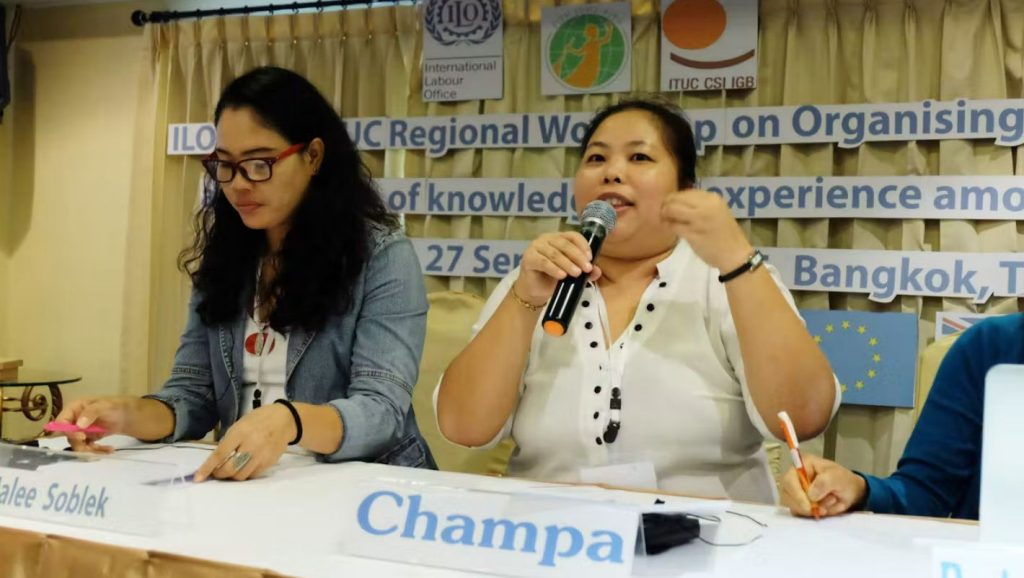
“Some of my friends are already 60 and, like me, have worked since they were in their late teens or early twenties. This is their occupation. They have jobs and employers like other workers do. However, they are worried about the future, when they will no longer be able to work. When we don’t have energy to work as domestic workers, who will take care of us?”
Champa, President of the Network of Migrant Domestic Workers in Thailand
Social protection is not only one of the pillars of decent work; it can also be a driver of formalization. There are at least 384,400 domestic workers in Thailand, nearly 92% of whom work informally, while more than 80% are not enrolled in the Social Security Fund. In 2024, there were 125,000 registered migrant domestic workers in the country, largely women from the Lao People’s Democratic Republic and Myanmar. However, the ILO estimates that the actual number could exceed one million, as many migrant domestic workers have irregular migration status and therefore work informally. With full social protection, domestic workers will have a stronger incentive to migrate to Thailand through regular and safe channels to help meet the country’s growing care needs.
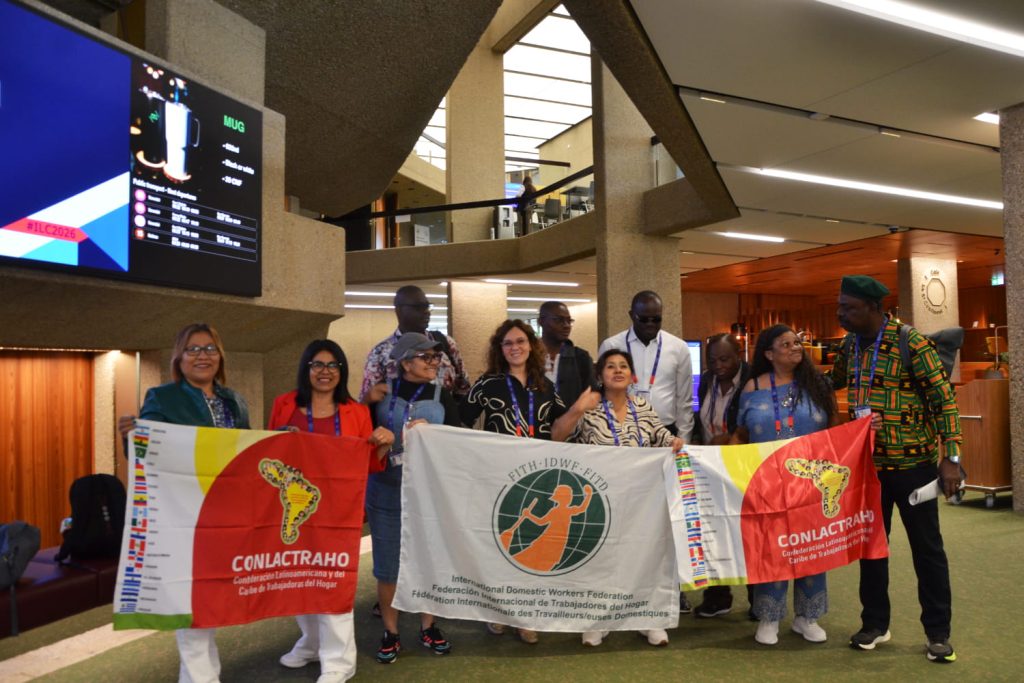
Legal recognition of domestic work and stronger protections for those who perform it did not happen overnight. They are the result of sustained mobilization by the Network of Domestic Workers in Thailand (NDWT) — with crucial support from HomeNet, the International Domestic Workers Federation (IDWF), and the ILO. Since 2012, the Network has pursued strategic campaigns and targeted advocacy to drive legal change while organizing and empowering workers on the ground. Today, the NDWT has a strong, inclusive membership base of more than 1,000 Thai and migrant domestic workers, strengthening its efforts across the country.
To address domestic workers’ exclusion from collective bargaining, the Network has introduced several innovative tools. In 2016, it developed a Standard Contract — a framework for employing domestic workers that combines mandatory legal requirements with recommended good practices — which was updated this August to reflect Thailand’s current labor protections. In 2018, together with the Department of Labour Protection and Welfare (DLPW) and an organization representing domestic worker employers, the NDWT drafted the Code of Conduct of Domestic Worker Employment, a guide to help ensure that domestic workers are employed in line with human rights principles and international labor standards.
Over the past six years, the NDWT took part in a consultation process initiated by the Ministry of Labour in collaboration with the ILO, which led to the adoption of Ministerial Regulation No. 15 in 2024. More recently, it contributed to the design of a strategic compliance planning program launched by the DLPW in May 2026, which engages government bodies, employers, recruitment agencies, and domestic workers. Tailored to the unique characteristics of domestic work, the initiative shifts the focus from reactive inspections to a broader, proactive approach that works on several fronts to strengthen enforcement and improve how domestic work is valued, regulated, and experienced.
The next step for domestic workers in Thailand is to ensure that these legal reforms translate into real change. Much work still lies ahead, but the progress they have made in such a short time is proof of what they can achieve through collective action. For them, decent work and dignity no longer seem like a distant dream.
“Now we have a major challenge ahead: making sure employers comply with the law and workers understand their rights under Section 33. Our next step will be to push the Thai government to ratify ILO Conventions 189 and 183. This is something we will continue campaigning for together.”
Kanyapha Prasopsuk, President of the Network of Domestic Workers in Thailand