As soon as she arrived in Oman, Naomi Chemurgor sensed that things would be very different from what she had expected and been promised. “The first thing my employer told me was that if I wanted to eat, I had to find food for myself or settle for whatever was left from what she ate. When there were leftovers, I ate leftovers. When there was nothing left, I did not eat because I could not spend money on food. I drank tap water that was not fit for human consumption. Soon after, I started having stomach problems, but I was never given medical care,” she recalls.
Days later, Naomi’s fears were confirmed: her job would not only be to care for an elderly woman, as stated in her contract, but also to clean, wash clothes, iron, and cook for around 15 people, including relatives and friends of her employer who were regularly in the house. “When I told them it was impossible for one person to do all those tasks, they lowered my salary. I felt powerless, but I stayed silent: my children in Kenya depended on me to survive,” Naomi says with resignation. The absence of complaint mechanisms, the lack of support networks due to restrictions on freedom of association, and their exclusion from labor protection in most Gulf countries prevent migrant domestic workers from asserting their rights.
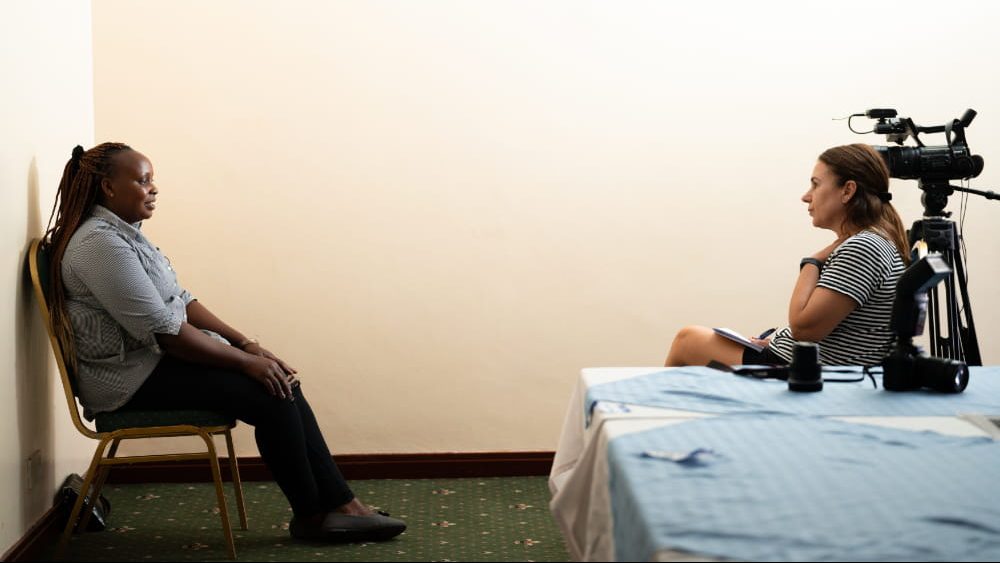
Before long, Naomi’s daily workload expanded: she was also expected to do domestic work at her employer’s daughter’s house and the family’s weekend house. Her exhaustion became unbearable. “I felt like I was collapsing. I had terrible back pain, and my hands were raw from constant exposure to harsh cleaning products without protective gloves,” she says. But when she begged her employer to show her some humanity, she was met with a chilling ultimatum: “You came here to make money, so you have to do whatever I want. Either you do everything we tell you to do and accept the salary we give you, or you will be sent back to Kenya dead. If you want to save your life, take what we give you and be grateful.”
As if the death threats were not enough, they lowered her salary again, confiscated her passport, and took away her phone. Naomi could no longer send remittances to her family, nor did she have any way to ask for help. “At that moment, I wished they would take me to the police station, even if it meant risking arrest or deportation. That would have been better than going home in a coffin,” she says, her voice trembling.
By then, not even the possibility of being falsely accused of theft or “absconding” — two allegations commonly used by employers to retaliate against domestic workers who stand up for their rights — could deter Naomi from seeking a way out. Across the region, fleeing an abusive employer is criminalized, automatically leaving migrant workers in irregular status and often leading to detention and deportation. This is why most workers do not report abuse or leave exploitative situations. Their lack of access to justice only compounds the problem. Complaint mechanisms, where they exist, involve lengthy and complex bureaucratic processes. Moreover, cases are rarely investigated, perpetrators are seldom held accountable, and workers rarely receive an adequate and effective remedy.
With her children as her driving force, Naomi kept going even as the violence escalated. “One afternoon, 20 members of the family surrounded me and told me that it would be my last day, that I would go back to Kenya as ‘luggage,’ in a box. The first thing I thought was: Who will take care of my children? So I locked myself in my room and begged God to help me. There was nothing I could do,” she remembers. Miraculously, a few days later, Naomi found a chance to save her life, and she did not hesitate to take it. “During a family celebration, I noticed that the front gate was slightly open. Quickly and quietly, I put the little money I had in my pocket, walked toward the exit, and, once I was outside, ran for kilometers until I found a taxi. I asked the driver to take me to the police because they were going to kill me,” she says, her eyes filling with tears.
Naomi could have been among the hundreds of women who have died under suspicious circumstances in recent years while performing domestic work in Gulf countries, according to reports by human and labor rights organizations and major media outlets. But she survived: the police ordered her employer to take her to the recruitment agency, which agreed to send her back to Kenya on the condition that she pay for her own flight. She spent several terrifying days living on the street until her family managed to raise enough money for her ticket. “I preferred having no shelter or food, and even risking prison, to being killed,” she says.
Mwanakombo Mwaita’s experience as a migrant domestic worker in Saudi Arabia was also marked by exploitation and abuse, leaving a lasting scar. Although nine years have passed since she returned to Kenya, the smile on her face immediately gives way to bitterness as she shares her story. Her dream of a better future began to crumble the moment she stepped into her new employers’ home. “The first thing they did was take away my phone. Within a few days, they stopped giving me food. It did not take long for me to get sick, but instead of providing medical care, they made me work even harder,” she says.
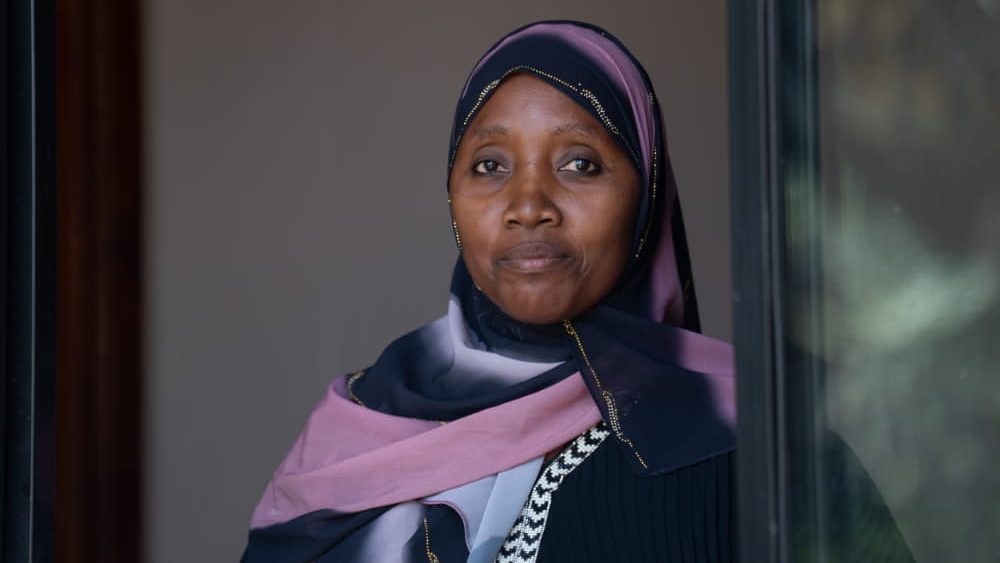
There are around 4 million domestic workers in Saudi Arabia, 150,000 of whom are Kenyan. This Gulf country is one of Kenya’s top sources of remittances. Yet a 2025 Amnesty International investigation documenting the experiences of more than 70 Kenyan domestic workers found that most had been deceived by recruiters in Kenya about the nature of their jobs. Once in Saudi Arabia, they were forced to work under brutal conditions, regularly toiling for more than 16 hours a day, denied days off, and prevented from ever leaving the house. When their working hours were taken into account, their average wage came to around USD 0.50 per hour. Mwanakombo’s experience echoes Amnesty’s findings: “I started working very early in the morning and finished very late at night. I had very few hours of rest. I cleaned the house, washed clothes, cared for the children, and even washed the family’s cars.”
Multiple studies have identified a hierarchy among domestic workers in the Middle East based on country of origin and skin color, with African women receiving the lowest status and pay. Amnesty’s report found that domestic workers from Africa face particularly dehumanizing treatment at the hands of recruitment agents and employers, including deeply humiliating verbal abuse, racist slurs, and even physical and sexual violence. According to a New York Times investigation, at least 274 Kenyan workers — mostly women recruited for domestic work — died in Saudi Arabia between 2020 and 2025. Autopsy reports were often vague and contradictory; some described women with signs of trauma — including burns and electric shocks — whose deaths were nevertheless labeled as natural.
“They shouted at me for no reason, insulted me, and called me slurs, but I did not stand up to them or report them because I was afraid and did not know where to turn. I endured it for three years, until the sponsorship ended and I returned to my country with many health problems from using harsh chemicals without protection and a deep emotional wound — but alive, and by my own decision,” Mwanakombo says with a measure of relief, aware that her fate could have been much worse.
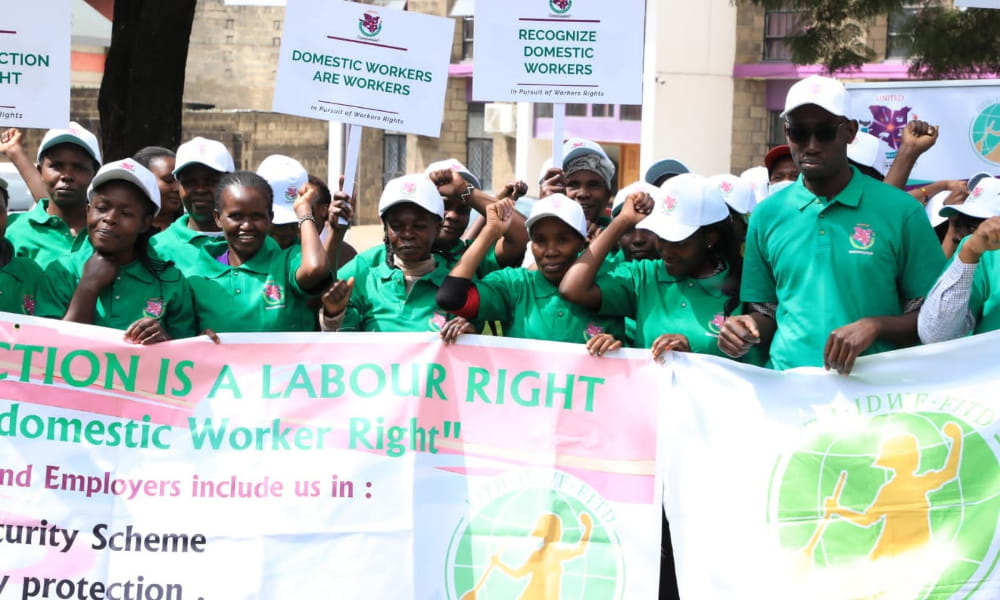
When Naomi and Mwanakombo returned to Kenya, they were just as alone and vulnerable as when they had left — a reality faced by most returnee migrant domestic workers. This helps explain why so many decide to migrate again despite the risks involved. With no jobs, no savings, and no support network, both felt trapped. Joining KUDHEIHA changed everything: it gave them a way forward and brought hope back into their lives.