Naomi Chemurgor’s early return to Kenya from Oman brought mixed emotions: on the one hand, she was happy to be safe and reunited with her children; on the other, she felt she had failed them and worried about how she would provide for them. She had to start from scratch. There was no time to recover from the trauma: finding a way to make a living was her most urgent priority.
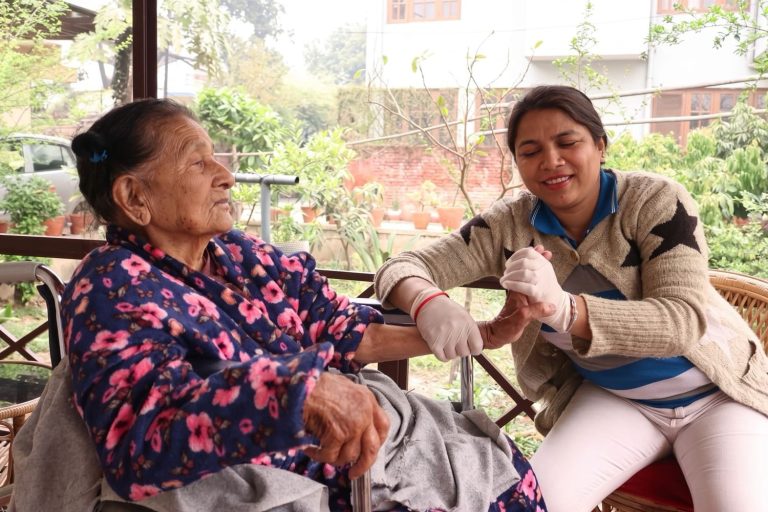
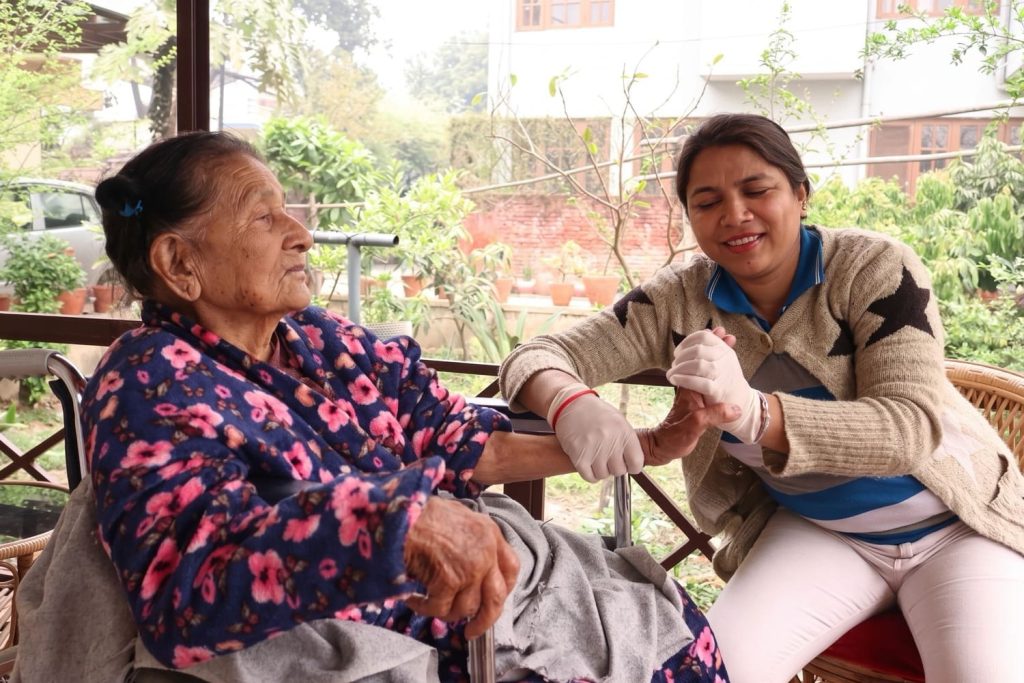
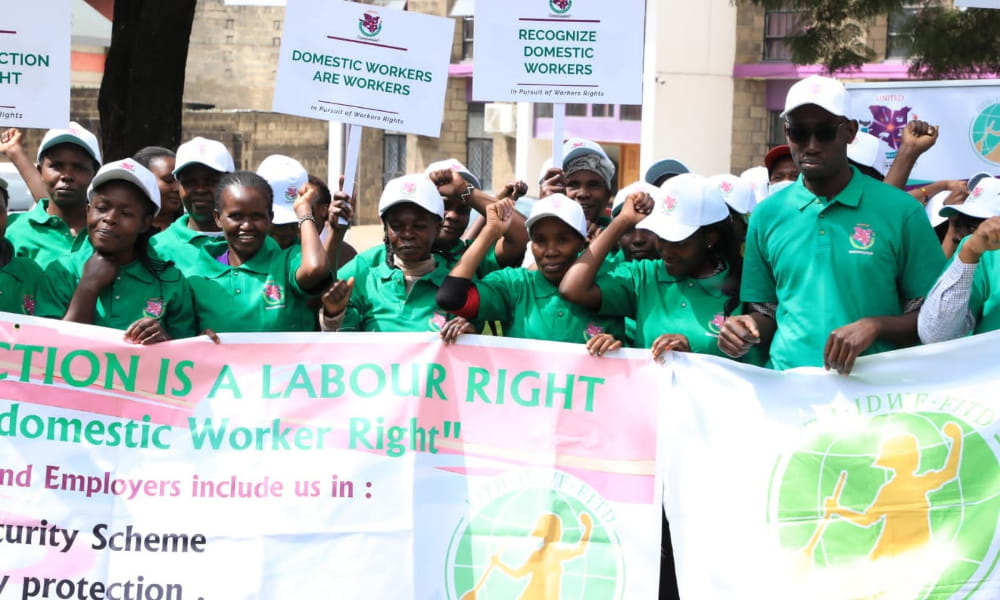
KUDHEIHA came into Naomi’s life at just the right moment. Seeing how devastated she was, a neighbor who was also a domestic worker invited her to a union meeting, where she immediately received support and guidance. For Naomi, joining the union meant much more than learning about her rights: it meant regaining her confidence and hope. She was soon able to return to paid work when her former employer, now retired and in need of care, hired her again.
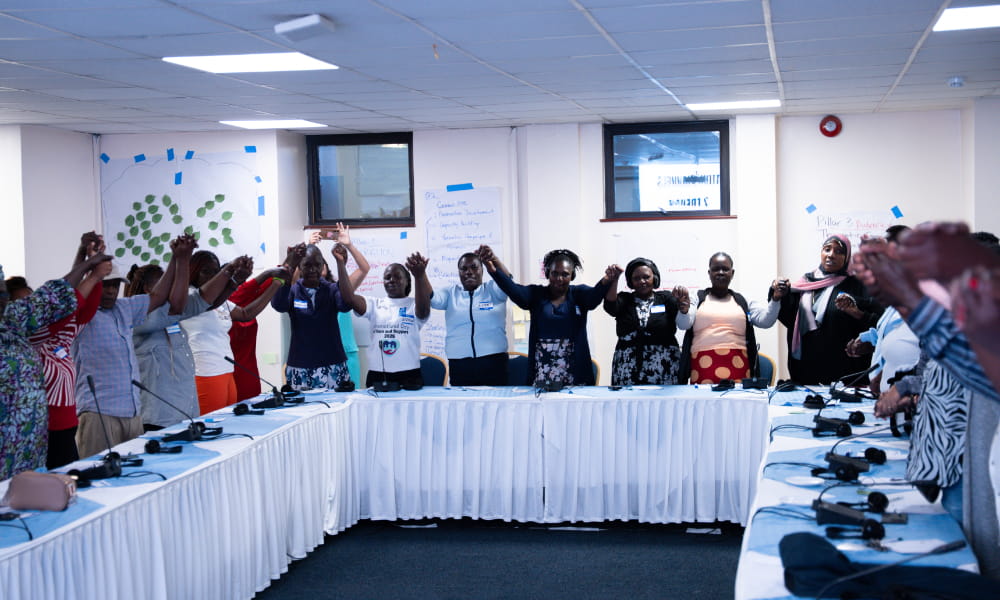
Naomi is far more than a survivor — she is a fighter. Despite everything she endured, she has become a strong woman, full of optimism and gratitude. Today, she organizes migrant domestic workers and plays a key role in KUDHEIHA workshops, where she shares her story with other domestic workers who want to migrate, educates them about their rights, and guides them on what to do if they face exploitation or violence while working abroad. “I don’t see myself as a victim: I believe my experience helps other women and prevents them from going through what I went through,” she says.
“At KUDHEIHA, they do not just teach you about your rights; they give you love and make you feel that you are not alone. The union is a place we can call home. I am finally at home.”
Naomi Chemurgor, migrant domestic worker organizer at KUDHEIHA
Shortly after returning to Kenya from Saudi Arabia, Mwanakombo Mwaita was invited by a friend to join KUDHEIHA. She began attending training sessions and soon learned about her rights. Today, she is one of the returnee migrant domestic workers leading the union’s Migrant Domestic Workers Association.
“The pre-departure training we provide at KUDHEIHA is key: we guide workers who want to migrate so they can do so through regular and safe channels, follow the proper procedures, know their rights, read and understand their contracts before signing them, and avoid going to countries that do not have formal bilateral agreements with Kenya,” Mwanakombo explains. For returnees, the union provides free legal advice, supports them in filing grievances, and offers professional psychological support. “Returnee migrant domestic workers are often traumatized and need support. Those who survive… Because every day, one of our sisters dies in the Arab countries,” Mwanakombo says.
One of her greatest concerns is the lack of transparency surrounding bilateral labor agreements between Kenya and destination countries. These agreements are not made public or drafted and negotiated with the participation of workers’ organizations. Mwanakombo argues: “We need clearer bilateral agreements with stronger protections, and the government needs to provide more training for workers who want to migrate. As a union, we do everything in our power, but it is not enough. We need more support and commitment from the government.”
In recent years, together with a multi-stakeholder coalition of migrant workers, KUDHEIHA has been pressing for significant changes to Kenya’s labor migration policy. In 2023, it petitioned the Employment and Labour Relations Court, demanding that the state fulfill its obligation to stop the abuse, trafficking, and exploitation of Kenyan domestic workers in the Middle East. On June 19, 2026, the court ordered the government to strengthen the oversight and vetting of recruitment agencies that send Kenyan workers to the Middle East. The question now is whether the government will comply.
According to KUDHEIHA, the current labor migration governance system — dominated by unregulated private recruitment agencies and weak bilateral protections — places Kenyan workers at unacceptable risk. “The reliance on domestic-worker remittances cannot justify exposing Kenyan women to abuse, forced labor, or unsafe conditions abroad. The Government of Kenya is under an obligation to guarantee a migration system that protects, rather than endangers, those seeking work abroad,” the union states. That is why it has been pushing for the passage of the Labour Migration and Management Bill, which the Senate approved in March 2026 and the National Assembly is now reviewing.
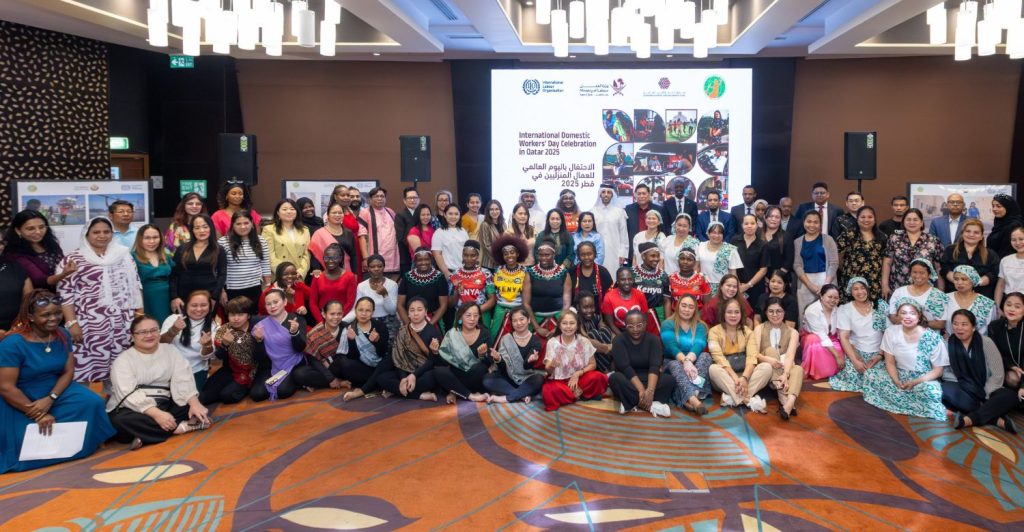
In the meantime, leaders like Mwanakombo and Naomi continue working tirelessly to fill the gaps left by the government. Today, the safety and protection of migrant domestic workers depend on the workers themselves: on their own support networks, on the unions that organize them, and on the international federation — the IDWF — that brings their voices into every global space where labor migration governance and care policies are shaped.
“My life has changed since I realized that I could help change the lives of my Kenyan sisters. I am not a victim: I am a leader, able to support women in vulnerable situations, just as I once was.”
Mwanakombo Mwaita, a leader with KUDHEIHA’s Migrant Domestic Workers Association
For anyone wondering whether organizing migrant domestic workers delivers tangible change, Naomi Chemurgor and Mwanakombo Mwaita offer a simple but powerful answer: organizing saves lives.