War hits everyone, but it hits hardest those who are already vulnerable. Just when it seemed migrant domestic workers in the Middle East could hardly be pushed any further to the margins, the war proved otherwise: once again, governments and employers left them behind. In a bitter paradox, the very workers who sustain households, care for families, and support national economies across the region are among the first to be overlooked and excluded from protection — left to bear the brunt of this humanitarian crisis. The war has not created entirely new problems for migrant domestic workers; it has magnified vulnerabilities rooted in coercive migration regimes, the kafala system, and exclusion from labor laws and social protection.
Since March 2026, the escalation of hostilities in Iran, Lebanon, and neighboring countries has disproportionately affected migrant domestic workers in multiple, overlapping ways. Many have been displaced or abandoned by employers, losing their jobs, housing, and access to basic necessities, shelter or medical care. Others have remained isolated inside private homes, cut off from information, contact with their families back home, support networks, and evacuation channels. Still others have seen their working hours or pay reduced. Undocumented workers have been struggling to access humanitarian aid or return home safely, while their irregular status puts them at risk of detention. Beyond the impact on workers themselves, lost income means they can no longer send remittances home, pushing families across Asia and Africa into financial hardship.
In the second week of the war, the International Domestic Workers Federation (IDWF) conducted an assessment of 365 migrant domestic workers across Lebanon, Qatar, Kuwait, Bahrain, and Jordan — documenting the conflict’s immediate and severe impact on their lives. At least six in ten faced severe food insecurity, with some going without food for five to seven days, while 50% identified food assistance as a top priority. Over 75% reported unpaid or delayed wages, or no income at all. In some clusters, more than 80% identified financial support as their most urgent need, as they were unable to cover basic necessities.
Although several ceasefires have been announced since early April, the situation remains volatile, with continuing airstrikes in Lebanon and isolated attacks elsewhere in the region. Regular IDWF follow-up assessments across the same five countries show that the crisis is far from over. Many domestic workers still lack stable employment, housing, or income; in many cases, they have been forced into debt. Fear, insecurity, and repeated displacement also persist, as do legal precarity and the risk of deportation. The evidence also points to a reality that extends far beyond the war: most migrant domestic workers rely on their own community networks to survive.
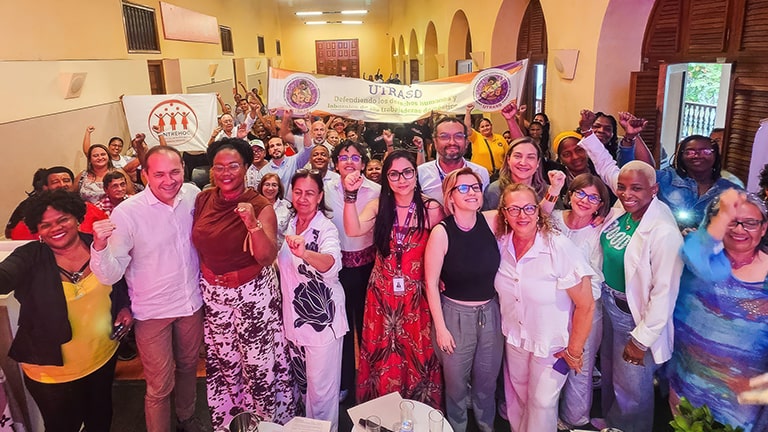
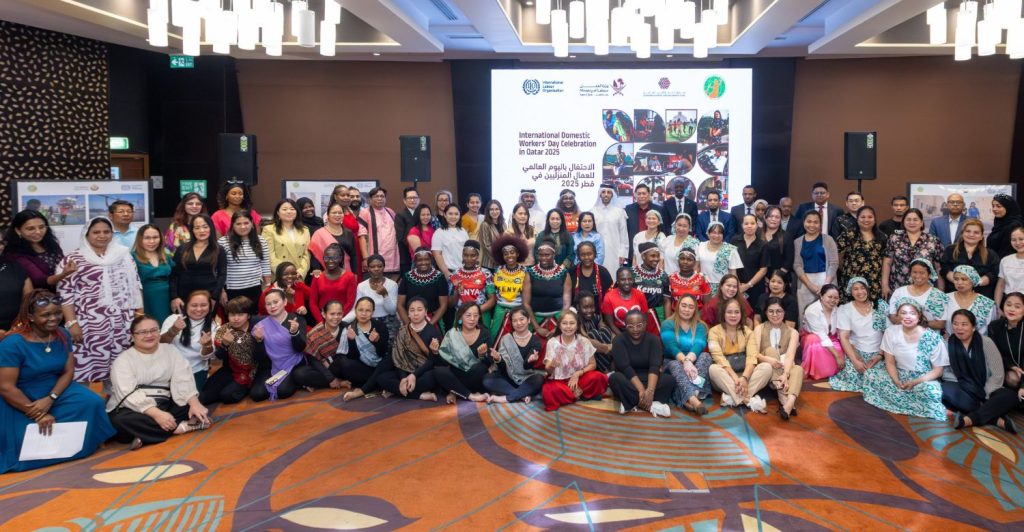
However, even amid adversity and under highly restrictive conditions — including barriers to exercising the right to freedom of association — migrant domestic workers in the MENA region are still organizing, developing new leaders, strengthening their collective power, and influencing policies. They are doing far more than resisting the crisis and meeting urgent needs through worker-led solidarity: they are building longer-term pathways toward change.
“Our commitment is stronger than our circumstances.”
Han, a community leader for migrant domestic workers in Kuwait
Hunger, Insecurity, and Despair Across Borders
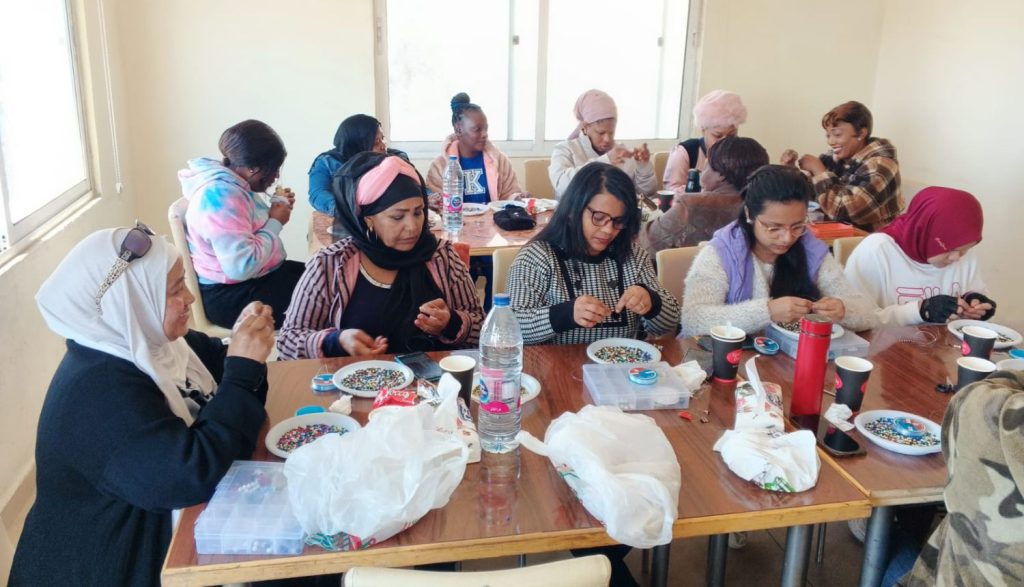
When war escalated across the Middle East, many migrant domestic workers were dismissed overnight without compensation, while others were forced to accept reduced hours or pay, or compulsory “no work, no pay” arrangements. They all share the same fight to stay afloat, the same uncertainty, and the same concern for the families who depend on them back home.
Grace is a single mother who moved to Kuwait 13 years ago, driven by poverty in the Philippines. Before the war, steady work allowed her to send money home regularly, but when the conflict escalated, her employer first cut her hours and pay and then dismissed her without notice or compensation. “Every day is about finding a way to survive. I try to find part-time work wherever I can, but it is not steady. Some days I earn a little; other days, nothing at all. It is very stressful,” she says.
“I am the only one providing for my children, so I cannot just stop. Without a steady income, I do not know how I can continue sending them to school. It breaks my heart.”
Grace, a Filipina domestic worker in Kuwait
Janet’s situation is desperate. After ten years of part-time domestic work in Lebanon, she had achieved some financial stability, built a family, and begun to imagine a better future. Then the war took her husband, home, and job. Widowed with two young children, unemployed, displaced, and staying with friends, Janet does not have the luxury of grieving. Every morning, she pushes through her sorrow and searches for work to put food on the table.
“My house was bombed, and my husband was inside. He died. Many of the homes where I worked were also bombed, or the families fled because of the danger, so I was left without work too. Now I have no home and no job. All I have left are my children.”
Janet, an Ethiopian domestic worker in Lebanon
Amid the instability, many employers are taking advantage of migrant domestic workers’ need for income — especially those in irregular status — who have little choice but to accept informal, poorly paid jobs. With more workers competing for fewer opportunities, wages have fallen by as much as half. “Before the crisis, you could earn around 200 riyals [about USD 54] for four hours. Now nobody pays that. Sometimes I accept 100 riyals [about USD 27] for four hours, just to get by,” says Geraldine, a Filipina who had worked as a live-in domestic worker in Qatar for more than eight years and has had no steady work since her employers left the country in March.
Geraldine is an essential part of what are known as global care chains: while her mother cares for her children, she cares for others abroad and sends remittances that sustain her family. Every year, 200 million migrant workers send money home, supporting 800 million family members. In more than 77 countries, remittances account for at least 3% of GDP, and in 30 countries, they exceed 10%, underscoring their critical role in national development.
“I chose to stay because there are no jobs in the Philippines and my children are in school. As a single mother, it is hard. Since I stopped receiving my salary, I have not been able to support my family back home. This is the first time in eight years that I have not sent them money.”
Geraldine, a Filipina domestic worker in Qatar
The war has also raised living costs across the Middle East, forcing many migrant domestic workers to borrow simply to get by and pushing them deeper into a cycle of debt and dependency that often begins at the outset of migration. Faced with exorbitant recruitment fees, many domestic workers borrow from community lenders or recruitment agents, or take salary advances from employers to finance their migration. Opaque, unregulated, and poorly monitored recruitment processes can trap them in debt bondage, limiting their ability to leave abusive situations.
Hannan, a Filipina domestic worker who has lived in Kuwait for 15 years, lost her job in March when her employer fled the country without notice. “I was suddenly alone. I had no salary, nowhere clear to go, and I was afraid for my safety. Sometimes I have to think twice before spending even a small amount. What if I have nothing left tomorrow?” she says. Extreme need pushed her into debt, even though she knew that getting through today could mean deeper financial hardship tomorrow.
“I have been forced to take out loans just to survive. The interest is very high, and I know it will be hard to repay, but I had no choice: when your family needs food and medicine, you do not have the luxury of refusing. My priority is to keep my family alive.”
Hannan, a Filipina domestic worker in Kuwait
The Life-Threatening Cost of No Social Protection
In times of crisis, migrant domestic workers provide the care that keeps economies across the Middle East running. But who cares for them? Most are struggling to survive with little or no access to social protection or health care. Across the Arab States, only 4% of domestic workers are legally covered by at least one branch of social security. In practice, however, 99.7% are excluded from social protection systems — the highest share of any region worldwide. Nor do they have free access to public health care, except in emergencies.
Ayah, a Filipina who has worked in Kuwait for 16 years, is among the many migrant domestic workers who were placed on indefinite unpaid leave when the conflict escalated. Her circumstances are particularly dire: she is not only facing a loss of income but also battling stage 4 cancer and trying to continue treatment amid medicine shortages and limited access to health care. “We have to divide what little we have among 80 people who are all in need. That means my treatment is no longer consistent, and I can now take my daily medication only two or three times a week,” Ayah says.
Without adequate treatment, Ayah’s condition has worsened. “I am forced to endure the pain caused by my illness in ways I never imagined. For someone like me, every delay in treatment is not just discomfort — it is life-threatening,” she says. Despite her worsening condition, she continues to look for part-time work to meet her daily needs, support her children and family back home, and pay for critical medical treatment. “But with so many workers affected by the crisis, we are all competing for the same limited opportunities,” she explains.
“Without work and with limited access to health care, I am fighting two battles: cancer and this crisis. For workers like me, no work means no survival.”
Ayah, a Filipina domestic worker and migrant community leader in Kuwait
Hawa, a domestic worker from Sierra Leone, was left undocumented during the 2024 war after her employer fled Lebanon with her passport. Soon afterward, a car crash left her severely injured and unable to work. The International Organization for Migration (IOM) covered her first surgery, but she needs several more to regain her mobility. Unable to afford them and with no coverage from the public health system, she is living temporarily in an NGO shelter, hoping to get the help she needs to avoid permanent disability.
Under international human rights law, governments have an obligation to ensure that all workers have access to social protection. Yet the war in the Middle East has exposed the persistence of a labor migration model deliberately designed to shift all risks onto marginalized workers.
The Mental Health Toll of War
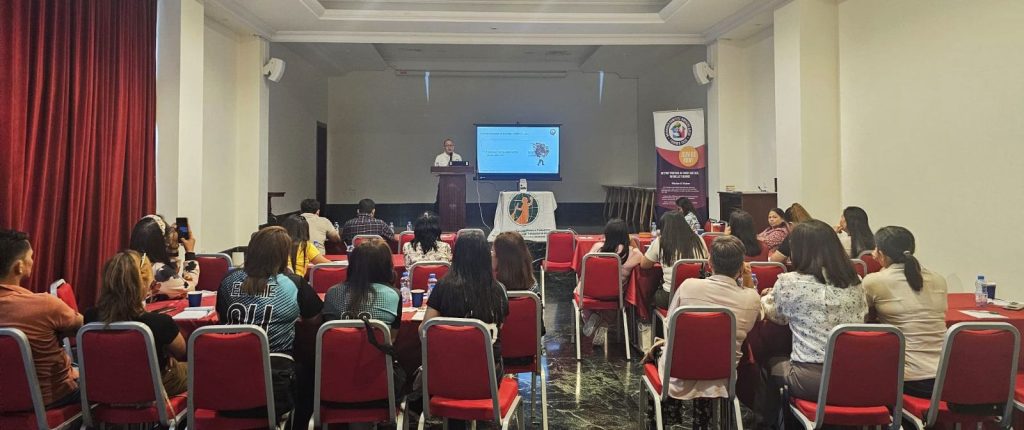
Amid the chaos across the Middle East, migrant domestic workers are living with constant fear for their safety while facing mounting stress over financial insecurity. According to the World Health Organization (WHO), an estimated one in five people affected by conflict live with depression, anxiety, post-traumatic stress disorder, bipolar disorder, or schizophrenia. The mental health impact stems not only from exposure to violence and loss, but also from poverty, discrimination, overcrowding, food insecurity, loss of livelihoods, and lack of access to basic services.
“There is fear every day — not just because of what is happening around us, but because we have no income, no security, and no clear path forward. It is not just about losing work — it is about losing stability, safety, and hope.”
Ayah, a Filipina domestic worker and migrant community leader in Kuwait
Gloria, from Ethiopia, worked as a cleaner in a pharmacy in Beirut’s southern suburbs, one of the areas most heavily targeted during the hostilities in Lebanon. From one day to the next, her employer shut the business and left the neighborhood without paying her outstanding wages or compensation. But Gloria had no option to move somewhere safer: she had to remain in the danger zone, where living costs are lower. Since March, she and her seven-year-old son have lived under constant strain — from the bombings as much as from the lack of money.
“Most days, we do not sleep in the house because it is dangerous. When we hear that a bomb may hit nearby, we go outside and sometimes sleep in the street until we know it is safe to go back. My son is very scared and cannot be alone anymore. He follows the news even more closely than I do.”
Gloria, an Ethiopian domestic worker in Lebanon
As a committed community leader, Chinx has put migrant domestic workers’ needs ahead of her own well-being. In March, when the conflict erupted, she packed within minutes and, together with her husband and five-month-old baby, traveled 12 hours overland from Qatar to Saudi Arabia, then on to Malaysia and finally to her native Philippines. The journey was exhausting, fraught with setbacks and the risk of detention at borders. But concern for her fellow workers brought Chinx back to Qatar in May, even though returning meant putting her own safety at risk. Since then, she has organized mental health workshops to support migrant domestic workers and their families, creating a crucial space for healing and mutual support.
“Every time I look at my son while he sleeps, I think that no child deserves to grow up amid war and fear.”
Chinx, a community leader for migrant domestic workers in Qatar
Trapped in Legal Limbo
Under the deeply restrictive kafala system, migrant domestic workers’ legal status is tied to an employer, restricting their ability to change jobs, move freely or, in some contexts, leave the country without their sponsor’s consent. The wave of dismissals triggered by the war has left thousands scrambling to secure a new sponsor before they fall into irregular status — an increasingly remote prospect in these times of crisis — while exposing them to the risk of detention and deportation.
Mercy had worked in Jordan as a live-in domestic worker since 2010. When the war escalated, her employer fled the country, leaving her without work or a place to live. She is now staying with a friend and picking up occasional cleaning jobs, but she desperately needs a stable, full-time job — not only to get by but also to remain in Jordan legally as her residence permit is about to expire.
“I feel overwhelmed. As a mother who migrated in search of greener pastures, it is very difficult to think about what comes next when you have no choice. I have to stay despite the war and hope for the best, even though I may fall into irregular status.”
Mercy, a migrant domestic worker and community leader in Jordan
The confiscation of migrant domestic workers’ passports by employers remains common across Arab countries — another means of controlling their movement and other aspects of their lives. As employers fled their homes because of the war, many left domestic workers stranded in conflict zones without their documents, unable to move freely and facing serious obstacles to repatriation.
Soon after arriving in Lebanon from Sierra Leone, Aminata learned that she would be paid far less than she had been promised. When she questioned her employer about the lower pay, her life turned into a nightmare. “My employer not only shouted at me, but also confiscated my passport, took my phone away, made me sleep on the balcony, and forced me to work in other people’s homes with no extra pay,” she says. The abuse eventually drove Aminata to leave her employer’s home, but she was unable to recover her passport. Now she gets by on informal part-time work, as her undocumented status keeps her out of formal employment. The lack of a passport also makes it difficult for her to return home.
It is well documented that many migrant domestic workers in the Middle East are “loaned out” to other households or even “sold” by their employers as if they were commodities. Fearing job loss or retaliation, workers often feel they have little choice but to accept these abusive arrangements. Absconding accusations — which can result in workers being criminalized — have long been used by employers to evade legal responsibilities, avoid paying outstanding wages or benefits, or retaliate against workers who request a job change or speak up for their rights.
When the attacks on Kuwait began, Mimi discovered that she had been working irregularly since her sponsor had “sold” her to another employer about four years earlier, without her consent or the required paperwork, while assuring her that her iqama (residence permit) had been transferred. During one of the inspections stepped up by Kuwaiti authorities amid the war, Mimi learned that her visa was not under the employer she was working for. When police contacted her first employer, he denied ever transferring her and reported her as a “runaway.” Mimi was detained for almost two months before being deported to the Philippines.
“I felt completely abandoned and unprotected. I lived in fear every day in detention until I was deported.”
Mimi, a Filipina domestic worker in Kuwait
Challenging a Model Built on Exploitation

Approximately 6.6 million domestic workers are employed in the Arab States, representing 8.7% of all domestic workers worldwide. An estimated 83% are migrant workers, most of them from Asian and African countries such as the Philippines, Indonesia, Sri Lanka, Nepal, India, Bangladesh, Ethiopia, Kenya, and Uganda. Domestic work accounts for a significant share of employment in the region — 12.3% of total employment, compared with 2.3% globally.
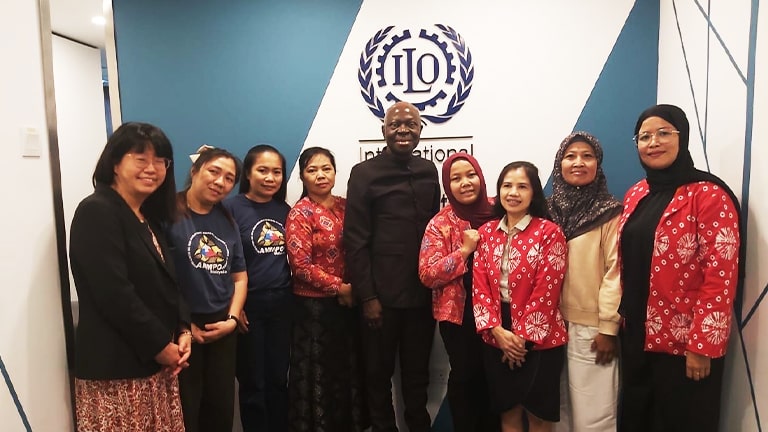
Despite this dependence on migrant domestic labor, Arab states have put in place deeply coercive migration regimes built on the exploitation of migrant workers. None of these countries has ratified ILO Convention 189 on decent work for domestic workers, and migrant domestic workers are routinely excluded from fundamental labor and human rights protections and work under the kafala system — a sponsorship-based migration regime that gives employers disproportionate control over them. Their temporary migration status further entrenches insecurity and poverty by limiting access to social protection, long-term residence, family reunification, and pathways to permanent employment.
In recent years, pressure from the IDWF, its affiliates and allies in the region has helped drive partial legal reforms and policies extending protections to domestic workers in several Arab states. Yet these measures remain insufficient and are often poorly enforced. As a result, migrant domestic workers still face multiple forms of abuse throughout the migration cycle: deceptive recruitment practices; contract substitution and wage theft; excessive working hours and denial of days off; food deprivation and poor living conditions; restrictions on freedom of movement, including the confiscation of passports and phones; discrimination and verbal, physical, and sexual violence; constraints on freedom of association; and barriers to accessing justice and remedies.
The war has only deepened the structural injustices migrant domestic workers face in their everyday lives in the Middle East — injustices rooted in a labor migration governance model shaped primarily by employer demand rather than workers’ rights. On one side are destination countries focused on importing cheap labor to meet their care needs. On the other are countries of origin focused on exporting labor to reduce unemployment and ease poverty through remittances. Caught in the middle are migrant domestic workers from the Global South, who migrate out of necessity only to find themselves trapped in a market-driven system — and yet continue to resist, organize, and challenge it.
“For lasting change to be possible, migrant domestic workers must be able to organize in unions. Freedom of association is not just a right — it is the right that makes all other rights possible.”
Ayah, a Filipina domestic worker and migrant community leader in Kuwait
Surviving Through Worked-Led Solidarity
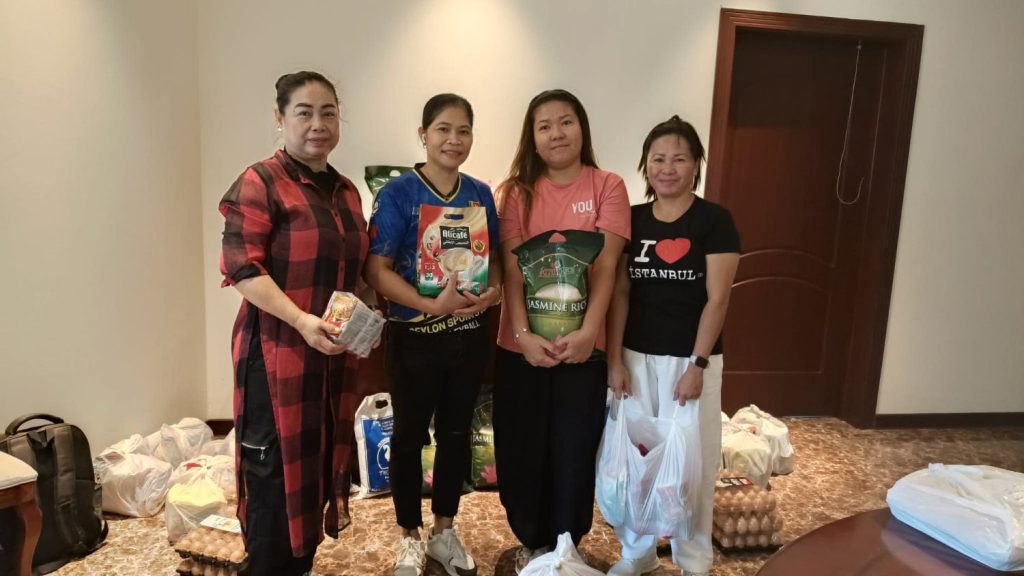
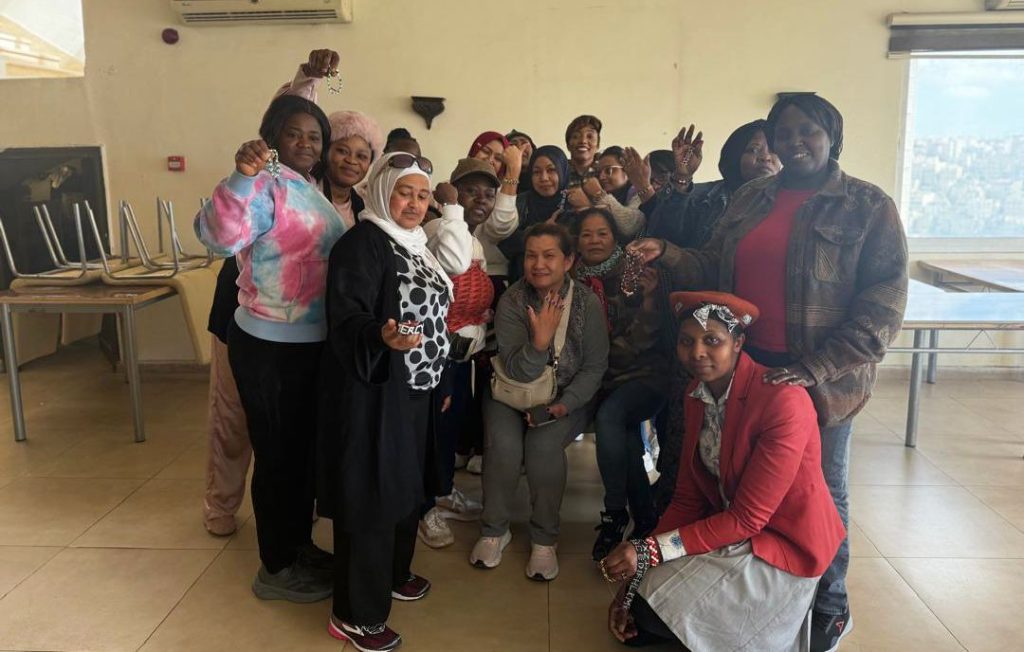
Migrant domestic workers in the MENA region are visible to bombs and missiles, yet too often invisible to those with the power to protect them. Frequently left out of formal support, they have no one to rely on but their own communities. As soon as the war escalated, migrant-led organizations stepped in to coordinate assistance for those in need — arranging emergency accommodation, distributing food, medicine, and basic supplies, sharing updates on the situation, helping with evacuations, and offering emotional support and legal assistance. These responses draw on the collective strength of workers on the ground and build on years of mutual support developed under extremely adverse conditions.
“There were days when I didn’t have enough food, and I couldn’t contact my family regularly. I felt invisible, like no one knew what I was going through. The support from the community and organizations helped me a lot. They gave me a safe place, food, and guidance. It reminded me that I am not alone and that someone still cares about us.”
Hannan, a Filipina domestic worker in Kuwait
Ann, a Filipina community leader for migrant domestic workers in the MENA region, points to the slow response from governments in providing support and communication. “We developed our own contingency plans and crisis management strategies, in some cases getting embassies to expedite repatriation and support undocumented workers,” she says. Ram, a member of the Kenyan Diaspora Association Bahrain, has seen migrant workers crowd into homes for safety, with 20 to 50 people sometimes sheltering under one roof. “Workers have been constantly calling us saying they have lost their jobs and have not eaten for several days,” she says. The association has responded by distributing basic necessities and providing counseling to people dealing with trauma.
“Despite everything, I try not to dwell on what we lost. Instead, I focus on what we can still do — organizing, advocacy, reintegration programs, and strengthening systems for migrant workers. Challenges are part of leadership. As a leader, you are not only thinking about yourself — you are thinking about the communities you serve.”
Ann, a community leader for migrant domestic workers in the MENA region
Worker-led efforts have been critical in mitigating the impact of the war on migrant domestic workers, but they remain insufficient given the scale of need. That is why, in addition to mobilizing solidarity through community networks, the IDWF has launched a fundraising campaign to help domestic workers rebuild their lives while strengthening the organizations fighting for lasting change across the region.
“Some workers have no friend to stay with or anyone to talk to during the war. Others don’t speak English or have identity documents, and some don’t even have Wi-Fi to communicate with their families. They just need to know they are not alone. They need help, no matter how small.”
Mercy, a migrant domestic worker and community leader in Jordan
Collective Action to Drive Structural Change
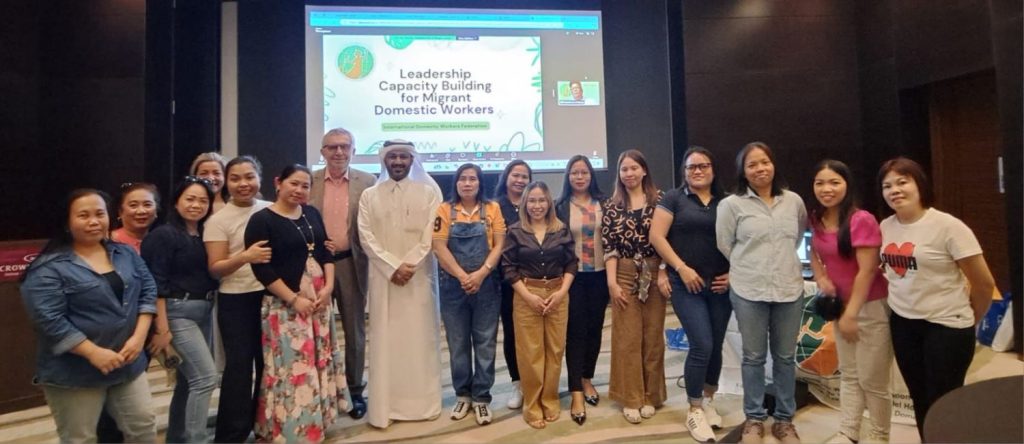
Getting back to normal in the MENA region still seems a long way off. As migrant domestic workers navigate this uncertainty, one question looms: what would “normal” even mean in a region whose labor migration model is built on the systematic exploitation of migrant workers? For those who have long challenged the status quo, the goal is not to go back to normal, but to transform the model itself.
“Fighting kafala means fighting not just a system, but a culture that enables modern slavery. It takes a great deal of courage. We choose to lead and take risks because we believe the next generation of migrant domestic workers deserves a dignified future.”
Ayah, a Filipina domestic worker and migrant community leader in Kuwait
In a region increasingly dependent on migrant domestic workers to meet rising care needs, labor migration governance cannot be shaped around labor demand alone. A fairer model must put workers’ rights at its center, connecting labor migration with decent work, social protection, care policies, gender equality, climate action, and sustainable development, while ensuring migrant domestic workers have a voice and representation in its governance through social dialogue and the right to organize. It also requires strong cross-border cooperation among countries of origin and destination throughout the migration cycle, from recruitment to return.
Labor migration can be a force for good — offering domestic workers and their families higher incomes and greater autonomy. But without adequate protections, crossing a border for work can become an ordeal rather than a pathway to a better future.
“I dream of a future where we can earn a decent wage, change employers, have days off, be treated with respect, form unions, and bargain collectively. I dream of a future where we are finally free.”
Mercy, a migrant domestic worker and community leader in Jordan
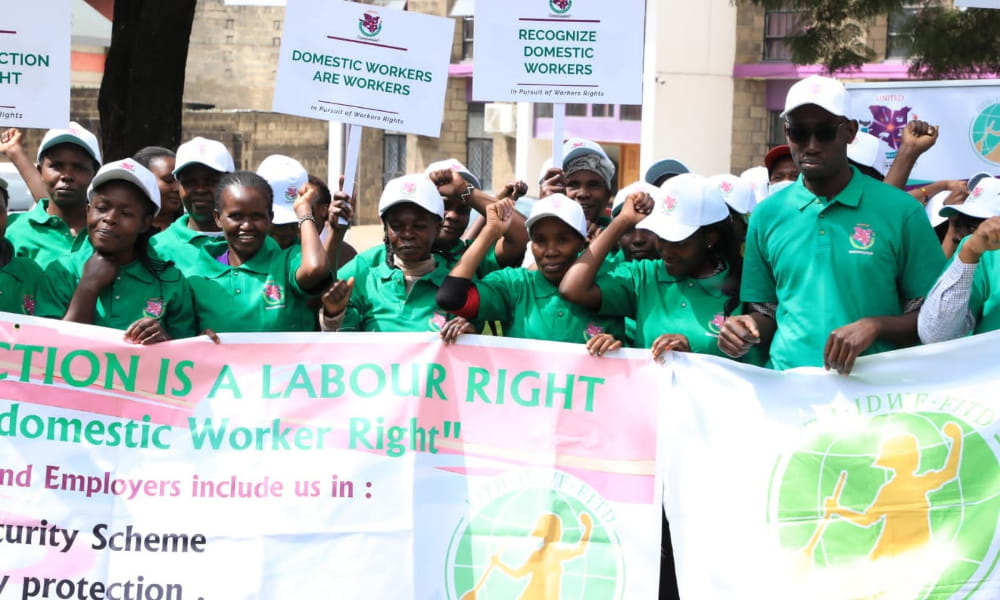
Even under highly restrictive conditions, migrant domestic workers in the MENA region have moved from providing case-by-case support to organizing for systemic change. Over time, their informal solidarity networks have grown into strong organizations, gaining critical support, developing leaders, building collective power, and influencing policy. With the IDWF’s support, they have strengthened their transnational organizing, grounded in a multicultural and intersectional migrant identity that has amplified the movement’s symbolic power and helped open access to global institutionalized spaces where legal, cultural, and narrative changes can take place.
“Strength comes from our own community, from migrant workers supporting one another. Even in times of crisis, we have a reason to keep going: we believe we can influence how we are seen and treated. We believe we can be a force for change.”
Chinx, a community leader for migrant domestic workers in Qatar
Amid a devastating crisis with no clear end in sight, there is still reason for hope: migrant domestic workers in the MENA region are organized, strong, and determined to fight for decent work, dignity, and migration justice. But they cannot do it alone: driving structural change will require global solidarity and collective action across borders.
“Change does not happen overnight. It comes through small but steady steps. The struggle is worth it when we look at how far we have come. But this is not the struggle of one organization or one leader — it is a collective struggle. When we come together, we are unstoppable.”
Ayah, a Filipina domestic worker and migrant community leader in Kuwait
Stand with migrant domestic workers in the MENA region and make a difference in their lives and those of their families.
Your support matters!