
Rosa: Lima, Peru
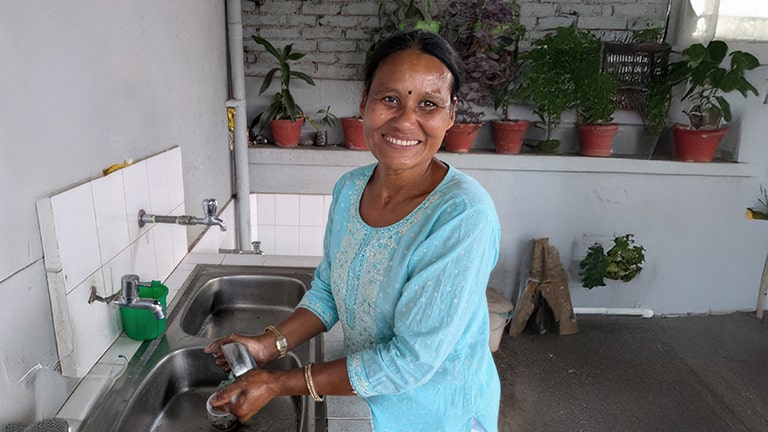
Rosa has been a domestic worker in Lima for 32 years. A single mother, she’s proud to provide her 19-year-old daughter with the education that wasn’t possible for Rosa. They can only be together on weekends; weekdays she’s a live-in domestic worker. It’s not easy to leave for days on end, but Rosa’s still grateful: She has a lot to look forward to, and in the past things were so much worse. Without the support and collective strength of a workers federation, she would still be in that dark place.
At 17 Rosa left her home of Huaraz to work in Lima, seeing no other way to help her poverty-stricken family. But as an indigenous woman, with no network or Spanish (being fluent in Quechua), she was vulnerable and alone. Rosa had become one of approximately 420,000 domestic workers in Peru (95% women) – who typically had no access to social security, and were paid well below minimum wage.
Rosa’s longest-standing employer was intimidating and volatile. “I lived in fear for 25 years”. Despite endless hours of cooking, and caring for the couple’s three children and their grand Miraflores home, Rosa was continually denied her basic rights. “I didn’t want to switch jobs though,” she remembers. “I heard of colleagues being treated very badly, even worse than me”. Rosa paid her own medical insurance because her employer refused. But by 30, Rosa was pregnant and couldn’t afford the payments. Her employer made it clear the baby would not be welcome – forcing Rosa to choose between raising her child in poverty, or leaving her in the care of a sister. “I had no choice. We needed money.” Rosa remembers this time as “extremely painful. I would not wish that on anyone.”
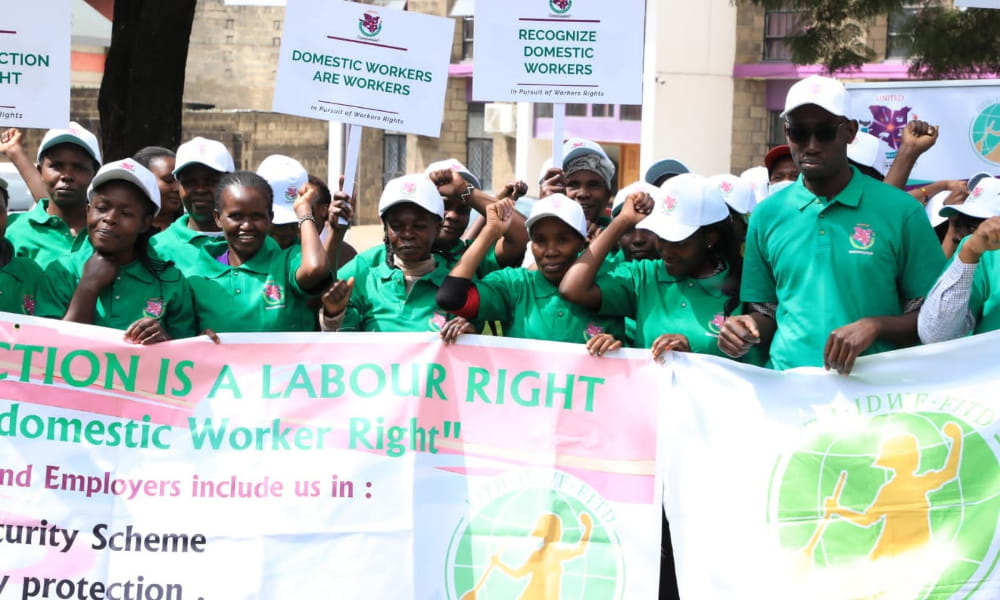
In the years that followed Rosa learned of the household workers union SINTTRAHOL (Sindicato de Trabajadoras y Trabajadores del Hogar de la Región Lima: an IDWF affiliate). Rosa learned that the union and the IDWF had been advocating for years, resulting in national laws protecting domestic workers’ rights to decent work and access to social security schemes. But Rosa was afraid to approach her employer, who continually refused to comply with the new standard. Eventually representatives from SINTTRAHOL were checking door to door for unregistered workers: Refusing to insure workers was now illegal, and resulted in a fine. “The union leaders fought so hard for us. They are warriors.” With the collective strength of the union behind her, Rosa finally got the benefits she was legally entitled to.
Rosa has a new employer now, with good working conditions and benefits, outlined in a written contract. She’s been enrolled in the pension scheme for 10 years but has to work another 15 before she can collect. “It won’t be much” she says, “But it will be something.” Rosa hopes her experience can help others: “So many young indigenous women come to Lima from the hills with no Spanish. They are discriminated against, mistreated and threatened. They need to know their rights, and that they’re not alone.” Members of SINTTRAHOL like Rosa, with the support of the IDWF, will continue to reach out to domestic workers in Lima, ensuring that no one is excluded from the right to decent work.