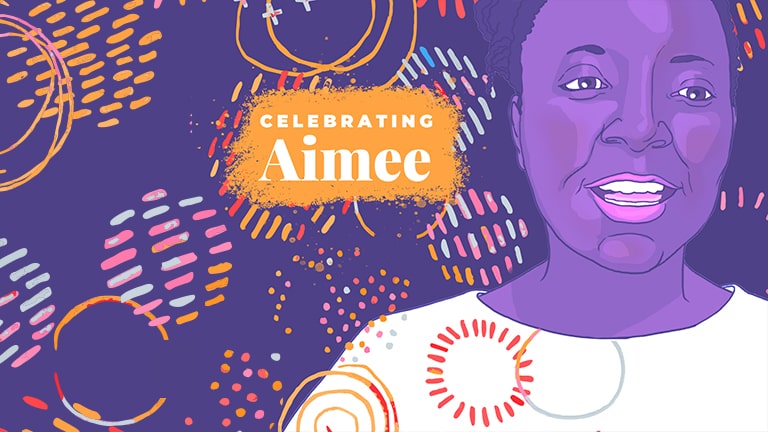
Aimée: Lomé, Togo
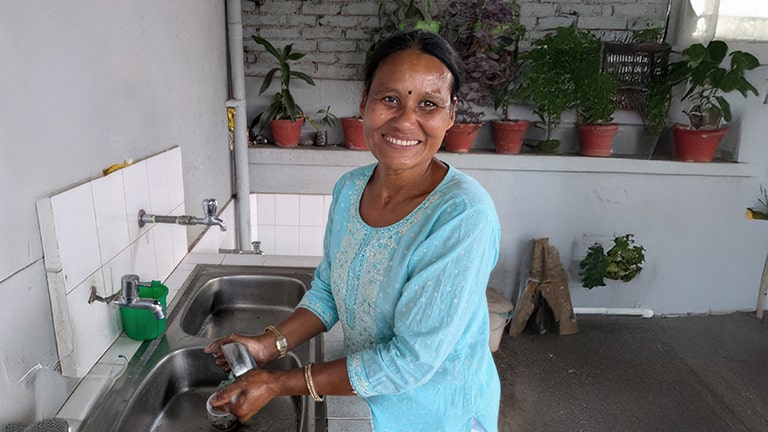
Six days a week, Aimée rises before dawn to begin the 90-minute commute to her employer’s home in downtown Lomé, Togo. Her work day runs around 10 hours, with regular overtime. The work is tiring, but gratifying, reports Aimée. She spends Sundays operating a small soap business (“I must work on rest days to survive”), and is grateful for the opportunity to do so. There were many years when decent working conditions – including days off – were not something she could count on.
Aimée began as a domestic worker at the age of 12 – cooking, cleaning and looking after a 3-year-old girl. She was grateful for the job, despite being expected to work 7 days per week, with no holidays or days off, and little time to rest or eat. Her employer was verbally abusive, falsely accused her of stealing, and on one occasion required her to replace four champagne glasses blown over by the wind, at a cost equivalent to over a month’s salary (her pay was 20,000 CFA per month; around $33 USD). “I cried and cried,” Aimée remembers. “I had to work late into the nights to pay it off”.
In 2011 Aimée seriously injured her hand at work, and realized she needed medical attention. But her employer wouldn’t allow her to leave – he had house guests, he reasoned, and there was too much to do. Aimée worked that day and for days after before she could get to a doctor. As a result, the injury never healed properly, and her hand is permanently disfigured.
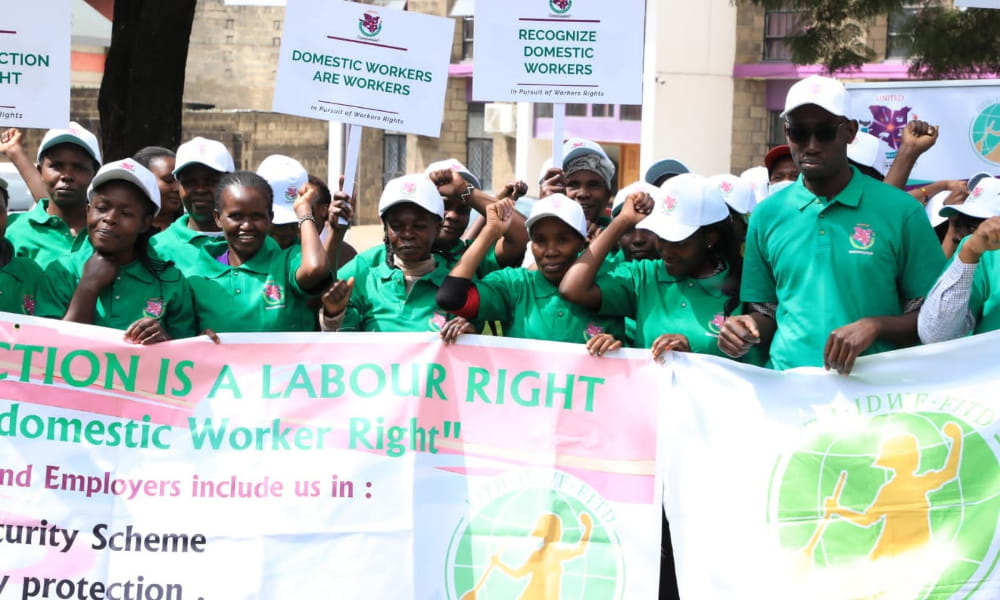
It was shortly after this incident that Aimée first heard of the IDWF and the local domestic workers’ union SYNADOT (Syndicat National des Domestiques du TOGO). Aimée remembers that it felt like a family right away. She learned her rights and how to negotiate with her employer, successfully gaining a written contract, better treatment and working conditions, a decrease in overtime, a weekly day off, and a 75% salary increase.
Aimée is also quick to point out the importance of the international movement to ratify ILO Convention 189 on Domestic Work as a step to securing legal protections for domestic workers in all countries (Togo has yet to ratify). Since 2020 the IDWF has supported affiliates to connect its membership virtually in order to continue this work, with inputs from computers and IT training to phone data, tripling participation rates in the African region, and allowing thousands of workers to attend virtual trainings who could not previously do so.
It was getting involved in the international movement, in fact, that inspired Aimée to take a formal leadership role with SYNADOT. As the General Secretary, Aimée would like to see all domestic workers in Togo access the same support and training that changed her life. “We are interesting, smart women from all over the world, supporting each other to protect our rights. We can do more things if we do them together.”