IDWF Statement on International Migrants Day 2025
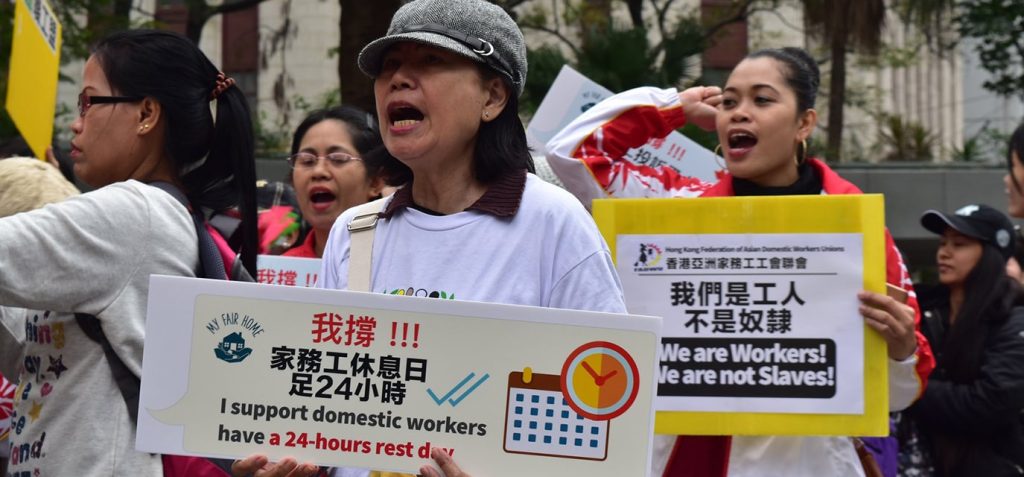
This International Migrants Day, as we recognize the vital contribution of migrant domestic workers to sustaining life, we reaffirm our commitment to keep advocating across borders for their dignity, safety, and labor and human rights. Transforming the unjust reality they face every day is at the heart of our struggle. Together, we are building power where invisibility once prevailed. Because migrant justice for domestic workers can’t wait any longer!
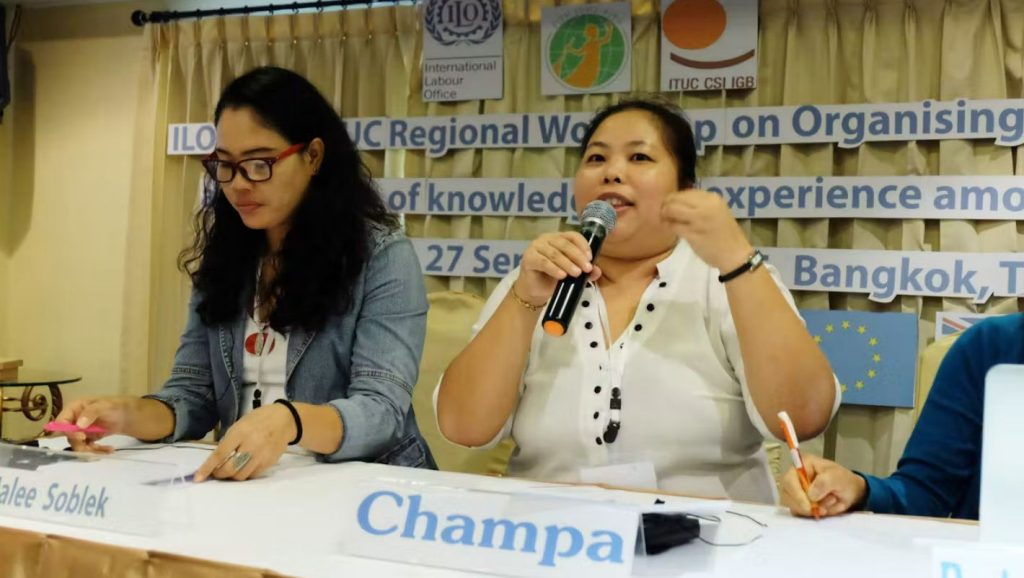
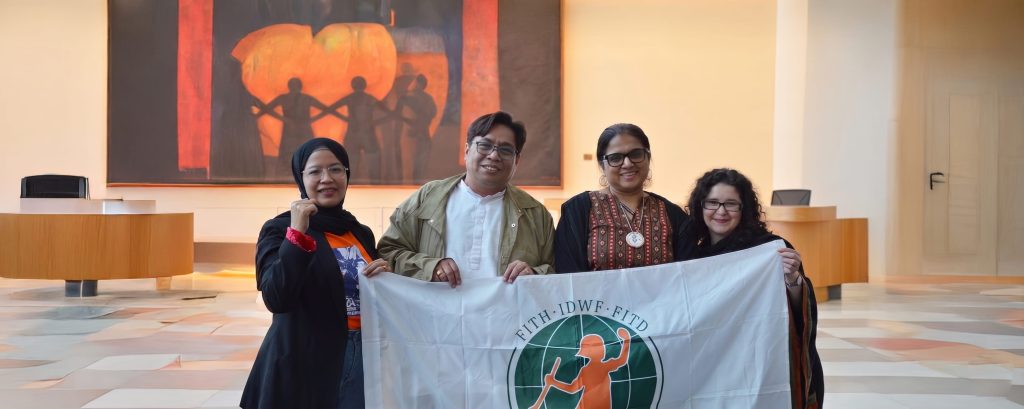
“Today’s celebration of Migrants Day is not just another day for migrants. It should also recognize our efforts and sacrifices, and most of all our dignity, aiming to achieve respect and equality for all migrants. Migrants leave their families and dreams behind to help other people build a better future. Let’s not just celebrate, but let’s recognize migrants’ contributions to society. Happy Migrants Day, everyone!”
Jec, IDWF Executive Committee member for Asia
Migrant domestic workers (MDWs) do not leave their children and their communities behind because they want to; they do so out of necessity, seeking to secure their families’ well-being. Lured by appealing job offers from countries with growing care needs, more and more women embark on a journey toward a better future. However, that dream often turns into a nightmare. Many return to their countries disappointed, cheated, and deeply scarred physically and emotionally. Others even return in a coffin.
Over 17% of domestic workers globally are migrants. They — mostly women of color from the Global South — form the majority of care workers in some high-income economies: together, the Arab States, Northern, Southern and Western Europe, and Northern America account for about 52% of all MDWs worldwide (ILO, 2015). Their work is vital for sustaining societies and economies, yet they are still often expressly or implicitly excluded from coverage under labor and social protection law. Their migration status, as well as their living and working conditions, are largely determined by bilateral labor migration agreements (BLMAs) between countries of origin and destination, which often result in weak and discriminatory levels of protection. These labor migration regimes not only perpetuate deep inequalities between national and migrant workers, but also between migrant workers of different nationalities, since the conditions of migration, recruitment, and employment vary depending on workers’ country of origin.
Some labor migration schemes, such as the kafala system in the Middle East — an employer-tied visa regime — and other sponsorship schemes predominant in Asian countries such as Malaysia, Singapore, and Hong Kong, tend to severely restrict MDWs’ rights and opportunities. These systems have reinforced and institutionalized a racialized labor structure that disproportionately affects migrant workers from Sub-Saharan Africa, North Africa, and South and Southeast Asia, who occupy one of the lowest strata in the social hierarchy of destination countries.
Under these regimes, employers hold absolute power over MDWs, who are often prevented from changing jobs, leaving the country without the sponsor’s consent, or even stepping outside the home. Employers may lock them in, restrict their mobility and communications, confiscate their passports, cancel their ID documents, or threaten to report them to the authorities as having “absconded,” which can lead to imprisonment or deportation. The isolation of MDWs, the power imbalance in the workplace, and the lack of labor inspection in domestic work expose these workers to severe abuse and exploitation: overwork and lack of rest; deprivation of food and decent housing; lack of health care; verbal abuse and humiliating treatment; and physical and sexual violence.
Cases of wage withholding and debt bondage due to recruitment fees and migration costs charged to MDWs are also widespread. The international recruitment landscape is increasingly dominated by private recruitment and employment agencies, as well as digital labor platforms (these rose eightfold from 2010 to 2020, according to a 2024 ILO report), many of which operate outside the law and in unscrupulous ways, preying on MDWs’ desperation for a steady income and heightening their risk of exploitation from the very beginning of the migration cycle.
In this complex context, limited access to justice and restrictions on the rights to freedom of association and collective bargaining for MDWs strip them of the ability to leave abusive jobs; seek help or justice when their rights are violated; and advocate for decent working conditions. This helps explain why MDWs are among the groups of workers most affected by modern slavery and human trafficking for labor exploitation. Domestic work is among the top five sectors that account for the majority of adult forced labor (ILO 2022).
Vulnerabilities are even greater for MDWs with irregular migration status or in informal employment, yet the unjust governance of labor migration pushes more and more domestic workers into irregular situations or informal work — a vicious circle that seems to have no end.
On this December 18, our demands are loud and clear:
- End unfair and discriminatory labor migration policies: BLMAs must be underpinned by international human rights and labor standards.
- Dismantle the kafala system and other abusive sponsorship systems.
- Ratify and effectively implement ILO instruments relevant to MDWs, including — and especially — Convention 189.
- Ensure that MDWs enjoy rights and protection equal to other workers throughout the full migration cycle.
- Guarantee MDWs full access to social protection benefits, regardless of their migration status and employment conditions.
- Ensure workplaces free from violence, harassment, and all forms of abuse or exploitation by adopting effective inspection, enforcement, and sanction mechanisms.
- Stop forced labor and human trafficking in domestic work.
- Ensure access to justice for MDWs: complaints mechanisms and remediation for workers; accountability for abusive recruiters and employers.
- Guarantee fair recruitment: regulate and monitor recruitment agencies and digital labor platforms.
- Ensure the rights to freedom of association and collective bargaining for MDWs.
- Promote social dialogue: MDWs must have a voice and representation in all spaces where policies that concern them are shaped.
- Create regular and safe migration pathways, and stop the criminalization of MDWs.
- Value the crucial role of MDWs in the care economy by recognizing their skills and experience with fair compensation.
It’s time to care for those who are always, unconditionally, on the frontlines caring for others. It’s time for migration to create opportunities for development instead of being a one-way ticket to injustice; for it to be a choice instead of a necessity. It’s high time for migrant domestic workers to finally get what they have long been denied: rights, decent work, and dignity!